Pore Boundary Layer Mass Transfer Constraints in Ultra Density Mercerized Twill Dyeing Protocols
Boundary layer mass transport limits in ultra-dense mercerized twills demand continuous high-velocity liquor shear to prevent surface ring dyeing.

Warp
Twill weaves engineered with total cover factors over 1.18 present severe hydraulic resistance during aqueous wet processing. High pick densities combined with heavy end counts compress adjacent yarn structures, wiping out inter-yarn voids and forcing liquor exclusively through tight intra-yarn capillary channels. When raw cotton yarns undergo caustic mercerization under tension, sodium hydroxide at 28 to 30 degrees Baumé swells the kidney-shaped cellulose fibers into rounded cylinders.
Fiber cross-sections expand while lumen voids collapse, driving up packing density and reducing average capillary pore diameters within the yarn bundle from 15 micrometers down to under 2 micrometers.
The structural rearrangement improves luster and tensile strength, but the loss of pore volume fundamentally changes the transport pathways open to dissolved chemistries. Bath dynamics shift from macro-convective capillary flow to restricted molecular diffusion inside closed fiber networks. Dyehouses processing un-mercerized twills rely on hydrodynamic pressure to drive dye liquor through the fabric matrix.
Ultra-dense mercerized structures block bulk liquor flow entirely, creating stagnant zones at weave intersections where floating yarns cross tightly bound picks.
| Construction Parameter | Standard 3/1 Twill (Greige) | Standard 3/1 Twill (Mercerized) | Ultra-Density Twill (Greige) | Ultra-Density Twill (Mercerized) |
|---|---|---|---|---|
| Ends per Centimetre (ISO 7211-2) | 42.0 | 43.5 | 68.0 | 71.0 |
| Picks per Centimetre (ISO 7211-2) | 22.0 | 22.8 | 38.0 | 39.5 |
| Fractional Cover Factor (Walsh Formula) | 0.94 | 0.97 | 1.21 | 1.26 |
| Mean Inter-Yarn Pore Diameter (μm) | 28.5 | 24.0 | 8.2 | 3.1 |
| Yarn Packing Density Index (0-1) | 0.58 | 0.64 | 0.72 | 0.85 |
Fabric density governs liquor permeability during both continuous and batch runs. Once warp cover exceeds unity, clearance between adjacent threads drops below the boundary layer thickness of ordinary dye streams. Four physical constraints dictate fluid behavior across these compact fabrics:
- Inter-thread constriction restricts transverse liquor flow during jet impingement, forcing fluid around yarn crowns rather than through the fabric core.
- Intra-yarn fiber swelling closes off interstitial channels between individual staple fibers during caustic treatment, raising total capillary pressure.
- Crimp geometry alteration creates asymmetric surface topography that breaks up laminar flow along the diagonal twill line.
- Lumen elimination reduces internal pore volume, shifting primary dye adsorption onto external cell wall surfaces.
A swelling ratio of 1.42 in 30 Baumé caustic liquor reduces total internal pore volume by 38 percent across 100 percent combed cotton yarns.
Mills attempting to dye dense twills without adjusting mechanical circulation parameters encounter uneven shade distribution between face floating yarns and buried interlocking picks. The weave geometry shields the inner yarn core from rapid liquor exchange, imposing hard mass transfer limits before chemical dye reactions begin. Achieving level dyeing across these constructions requires balancing yarn tension directly against mechanical liquor velocity.
Boundary
Liquor moving past a textile substrate leaves behind a stationary liquid film known as the Nernst boundary layer. The thickness of this stagnant layer controls how quickly dye molecules transfer from turbulent bulk bath to the fiber surface. In ultra-density mercerized twills, fluid velocity stalls inside the microscopic gaps between warp and weft crowns.
The effective boundary layer extends well beyond the fabric surface topography, spanning distances between 15 and 50 micrometers depending on external flow rate and liquor viscosity.
While convective transport carries dye molecules rapidly through the bulk vessel, passage across the stagnant fluid film relies entirely on concentration-driven molecular diffusion. Once dye molecules hit the boundary layer, flux density drops off exponentially with fluid film thickness. In tight twills, overlapping boundary layers from neighboring yarns merge into a continuous liquid barrier that isolates the fabric interior from chemical shifts in the main bath.
| Processing Machine Configuration | Relative Liquor Velocity (m/s) | Reynolds Number at Fabric Surface | Boundary Layer Thickness (μm) | Mass Transfer Coefficient k_L (m/s × 10^-5) |
|---|---|---|---|---|
| Atmospheric Jig (Static Bath) | 0.15 | 180 | 48.2 | 0.85 |
| High-Pressure Overflow Jet | 1.20 | 1450 | 18.5 | 3.10 |
| High-Velocity Nozzle Jet (Air-Jet) | 3.50 | 4200 | 7.2 | 8.45 |
| Continuous Pad-Steam Squeeze | 0.80 | 960 | 22.1 | 2.40 |
Dynamic liquor pressure governs boundary layer thinning. Reducing film thickness requires substantial differential pressure across the fabric plane ~ a condition difficult to maintain in open-width runs without stretching the warp or curling the selvedges.
- Bulk convection delivers dissolved dye aggregates into the primary vessel channel adjacent to the moving fabric web.
- Shear stress compresses the stagnant Nernst film against raised twill ribs under high fluid velocity.
- Molecular diffusion carries individual dye molecules across the thinned boundary layer along an active concentration gradient.
- Capillary forces draw the liquid film into the outer pore structure of the mercerized cotton bundle.
- Adsorption at the fiber interface depletes local dye concentration, sustaining the gradient needed for continuous mass flux.
ISO 105-A05 visual evaluation mandates light box shade comparisons under illuminant D65, TL84, and A to detect metameric unlevelness caused by incomplete core dye penetration.
Center-to-selvedge shade variation on high-density twills is frequently treated as a chemical leveling fault rather than a physical fluid dynamics failure. When bulk fluid velocity remains low, boundary layer thickness varies across the width of the dye vessel due to friction against machine side walls. The resulting mass transport differentials slow dye delivery to the fabric center, generating permanent listing across the roll width regardless of chemical auxiliaries in the bath.
Extended hold times cannot overcome these boundary transport limits.
Sorption
Reactive dye uptake on mercerized cotton follows a multi-stage kinetic pathway consisting of bath exhaustion, boundary layer transport, pore diffusion, and covalent fixation. Mercerization alters cellulose crystal structure from Cellulose I to Cellulose II, increasing accessible hydroxyl reaction sites by roughly 50 percent. This higher reactivity accelerates the surface adsorption rate constant.
When reactive dye molecules cross the hydrodynamic boundary layer, they bond rapidly to accessible hydroxyl groups on the fiber periphery before penetrating toward the core of the yarn bundle.

Why Does Pore Constriction Promote Ring Dyeing in Mercerized Yarns?
Rapid surface adsorption combined with slow interior diffusion generates an extreme concentration gradient between the yarn surface and the yarn core. In ultra-dense mercerized twills, intra-yarn capillary channels are physically restricted, causing dye diffusion coefficients inside the pore network to fall two orders of magnitude below bulk solution values. Outer fibers exhaust the dye bath locally before molecules can migrate into interior voids, trapping dye on the yarn perimeter in a classic ring-dyeing profile.
To evaluate the mathematical impact of salt-driven exhaustion on mass transfer, consider a worked application using a high-affinity bi-functional reactive dye system on an ultra-density mercerized twill running in a jet vessel.
Assume a batch weight of 300 kilograms of fabric immersed in 1,800 Litres of bath solution, yielding a liquor ratio of 1:6. The formula utilizes 60 grams per Litre of anhydrous sodium sulfate added to promote exhaustion. The initial bulk dye concentration (C0) stands at 4.0 grams per Litre.
The effective diffusion coefficient of the reactive dye in free liquor (D0) measures 3.2 × 10⁻¹⁰ m2/s, while the constrained pore diffusion coefficient (Dp) within the dense mercerized fiber network drops to 1.8 × 10⁻¹² m2/s due to steric hindrance and tortuosity factors.
The mass transfer rate across the external Nernst boundary layer (Jb) follows Fick’s first law:
Jb = kL (Cb – Cs)
where kL represents the mass transfer coefficient (2.5 × 10⁻⁵ m/s under high jet flow), Cb is the bulk concentration (4.0 g/L), and Cs is the fiber surface concentration. At initial contact before surface saturation, Cs approaches zero, yielding an initial boundary flux of:
Jb = (2.5 × 10⁻⁵ m/s) × (4.0 kg/m3) = 1.0 × 10⁻⁴ kg/m2s
Simultaneously, internal pore flux (Jp) toward the yarn center at a distance r (40 micrometers from yarn surface) is governed by:
Jp = Dp left( fracdCdr right) ≈ (1.8 × 10⁻¹² m2/s) × left( frac4.0 kg/m3 – 0 kg/m340 × 10-6 m right) = 1.8 × 10⁻⁷ kg/m2s
Comparing the boundary flux Jb (1.0 × 10⁻⁴) to the internal pore flux Jp (1.8 × 10⁻⁷) reveals that boundary transport delivers dye to the fiber exterior nearly 550 times faster than the dye can diffuse into the inner yarn core. Alkali dosing under these conditions locks dye molecules covalently to surface hydroxyls before core migration occurs, cementing a ring-dyed state.
Linear salt dosing schedules prevent local exhaustion surges by maintaining a constant chemical potential gradient across the Nernst layer.
Process controls must suppress surface reaction rates while maximizing diffusion time to overcome this structural kinetic mismatch. Dyehouses balance these forces using controlled chemistry parameter sets:
- Electrolyte dosing profiles utilizing progressive linear or quadratic dosing over 45 minutes prevent rapid surface exhaustion spikes.
- Alkali addition delays hold bath pH at 6.5 until exhaustion equilibrium completes across the yarn core, preventing premature fixation.
- Temperature ramp limits restricted to 1.0 degree Celsius per minute prevent kinetic acceleration of surface bonding mechanisms.
- Penetration accelerants based on low-foaming short-chain phosphated alcohols reduce dynamic surface tension, aiding capillary wetting.
Neglecting kinetic diffusion balance during alkali fixation produces severe unlevelness, resulting in scrap rates exceeding 15 percent on bulk dye lots that require stripping and re-dyeing.

Fastness
Ring-dyed twill fabrics suffer from severe physical degradation during wear and laundering. When dye molecules concentrate within the outer 10 to 15 percent of yarn cross-sections, superficial physical abrasion removes color-bearing fibers, exposing the undyed white cotton core beneath. This mechanism produces frost marks, white creasing, and premature seam fading across dense cotton garments.
Color fastness evaluation requires subjecting finished fabrics to standardized physical friction and washing stresses. Dense mercerized twills dyed under severe mass transfer constraints show acceptable initial shade depth, but fail rapidly under mechanical rubbing and wash trials.
| Test Parameter | Test Standard | Ring-Dyed Profile (Low Penetration) | Core-Penetrated Profile (Optimized Process) |
|---|---|---|---|
| Dry Crocking Fastness | ISO 105-X12 | Grade 3.0 | Grade 4.5 |
| Wet Crocking Fastness | ISO 105-X12 | Grade 1.5 – 2.0 | Grade 3.5 |
| Domestic Laundering Fastness (5 Cycles) | ISO 105-C06 C2S | Grade 2.5 (Severe Frosting) | Grade 4.0 – 5.0 |
| Martindale Abrasion Shade Retention (5000 Rubs) | ISO 12947-2 / ISO 105-A02 | Grade 2.0 Change | Grade 4.0 Change |
| Flex Abrasion Color Loss | ASTM D3885 | Severe Edge Whitening | Minimal Shade Variance |
Standard test protocols confirm that physical fastness maps directly to the depth of dye penetration inside individual yarns. A fabric specification must enforce strict fastness thresholds that force mills to optimize mass transport chemistry rather than masking shallow dyeing with surface softeners.
- Spectrophotometric K/S cross-section analysis measuring relative color strength across cut yarn cores confirming minimum 80 percent dye depth penetration.
- Wet rub fastness compliance achieving minimum Grade 3.5 under ISO 105-X12 using standardized crockmeter friction parameters.
- Accelerated wash durability verification requiring less than Grade 0.5 shade change under ISO 105-C06 C2S industrial laundering conditions.
- Differential shade measurement across face and back ensuring Delta E values remain under 0.6 to verify complete transverse liquor passage.
Cross-sectional image analysis confirms that ring dyeing depth below 20 percent of yarn radius correlates directly with wet crocking scores under Grade 2.0.
Standard procurement contracts specify that bulk shipments failing ISO 105-X12 wet crocking at Grade 3.5 trigger automatic lot rejection, shifting financial liability for re-processing entirely to the dyeing mill.
Outlay
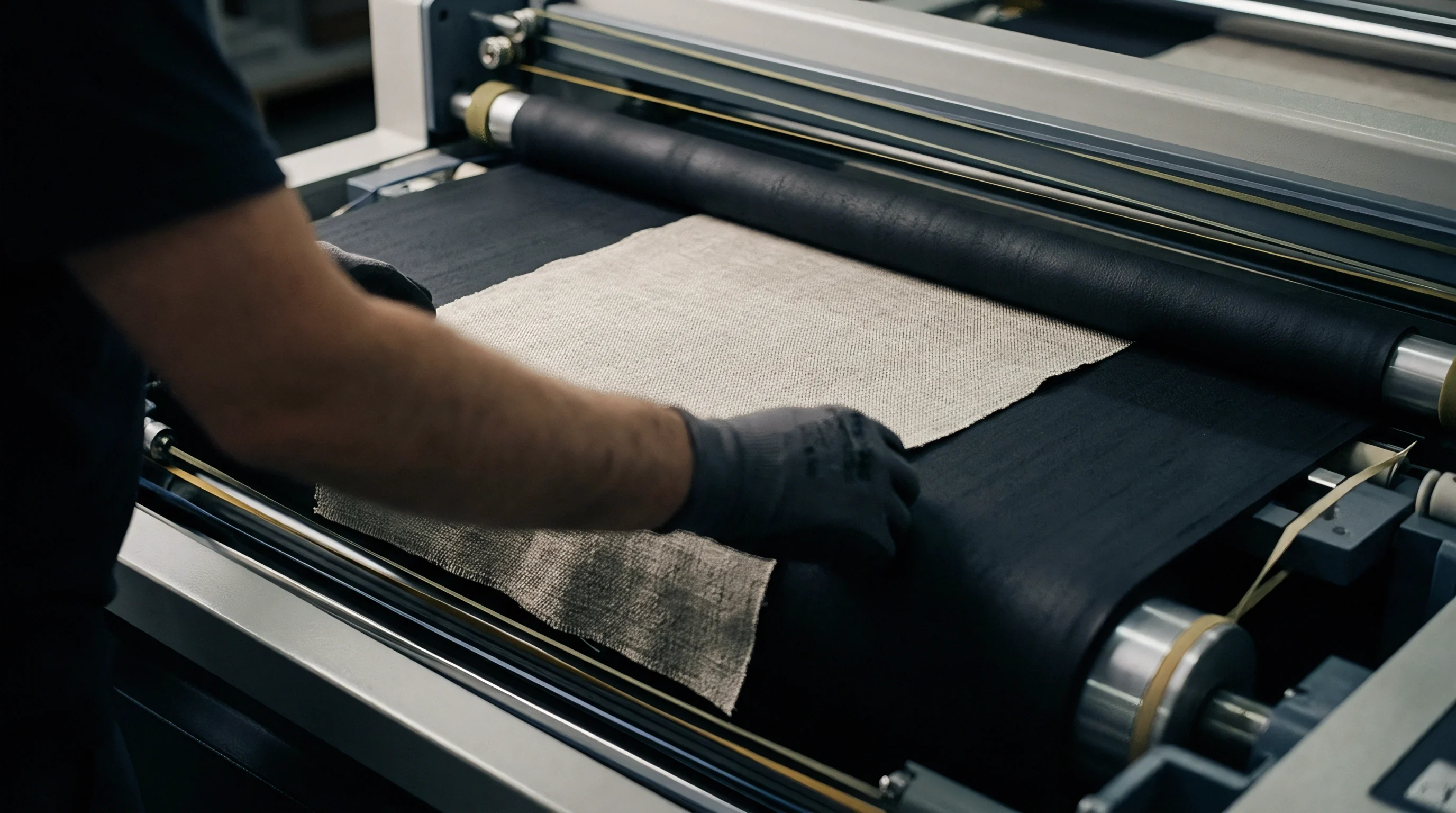
Overcoming pore boundary layer mass transfer constraints requires selecting processing equipment capable of generating high liquor interchange without damaging fabric surface optics. Jet dyeing vessels equipped with multi-nozzle high-velocity liquor circulation reduce Nernst film thickness, but increase running costs through high electrical power consumption and elevated liquor ratios. Continuous pad-dry-pad-steam ranges minimize water consumption, but introduce severe pad-mandrel nip compression risks that crush dense twill diagonal ridges.
Cold pad-batch dyeing offers low energy inputs, yet demands extended dwell times up to 24 hours to allow slow, unassisted pore diffusion into mercerized yarn centers. The economic choice between continuous, semi-continuous, and batch dyeing routes hinges on batch volume, shade depth, and acceptable lead times.
Financial analysis demonstrates that low-cost processing routes frequently produce higher landed costs when scrap rates and fastness failures are calculated across total volume. Selecting the correct production route requires balancing machine hourly rates against chemical costs and yield losses.
Consider a sourcing practice procuring 50,000 metres of 320 grams per square metre ultra-density mercerized twill dyed to a dark navy shade. Comparative unit costs across three processing routes reveal significant variance in total financial risk:
High-temperature jet dyeing operating at a 1:6 liquor ratio consumes 1.45 Euros per metre in direct energy, water, and chemical inputs, yielding a processing speed of 35 metres per minute with a historical bulk re-dyeing scrap rate of 2.1 percent. Cold pad-batch processing drops direct input costs to 0.98 Euros per metre due to minimal heating requirements, but requires 24-hour fixation dwell times, reducing floor throughput speed and raising shade variation scrap rates to 6.4 percent on dense constructions due to edge-to-center batch drying. Continuous pad-steam dyeing demands a setup cost of 2,200 Euros for machine threading and shade matching, but achieves processing speeds of 60 metres per minute with direct operational costs of 1.12 Euros per metre and a scrap rate under 0.8 percent once running.
At 50,000 metres, total conversion expense for jet dyeing reaches 74,017 Euros including scrap allowances. Cold pad-batch sums to 52,136 Euros in direct processing but carries 10,240 Euros in shade failure scrap liability, totaling 62,376 Euros. Continuous pad-steam generates 58,200 Euros in running and setup costs with only 1,280 Euros in scrap loss, landing total conversion expense at 59,480 Euros.
While cold pad-batch appears cheapest on simple chemical bills, continuous pad-steam delivers lower landed unit cost while eliminating batch dwell bottlenecks.
Commercial specifications must explicitly define physical processing constraints, target machine types, and penalty terms before issuing production purchase orders to wet processing mills.
Which mechanical nozzle configuration balances dynamic fluid shear against surface filamentation risk when processing ultra-dense mercerized twills under tight lead-time constraints?