Predicting Non Isothermal Hydrolysis Kinetics and Viscometric Degree of Polymerization Decay in Compacted Cotton Rope Core Microenvironments
Predict non-isothermal cotton cellulose chain decay in dense rope bleaching by modeling coupled radial acid diffusion and Arrhenius hydrolysis kinetics.
Acid
Continuous rope bleaching ranges expose compacted cotton strands to elevated temperatures, oxidative reagents, and mineral or organic neutralizers across variable dwell times. During rapid transit through steaming tubes and tight-strand saturation troughs, the central axis of a heavy rope bundle does not equilibrate instantaneously with the surrounding bath liquor. Chemical concentrations and thermal gradients across the bundle cross section diverge immediately from nominal vessel setpoints.
Hydrolytic cleavage of cellulose 1,4-beta-glucan linkages accelerates inside localized zones where trapped hydronium ions persist at elevated temperatures without sufficient alkaline buffering or convective rinse exchange.
Viscometric degree of polymerization measures the average chain length of the underlying cellulose polymer by dissolving conditioned cotton in cupriethylenediamine solvent according to ISO 5351. Virgin raw cotton fibre arrives at the preparation range displaying viscometric degree of polymerization values between 2400 and 2900. Aggressive wet processing reduces this molecular length through random chain scission.
When viscometric degree of polymerization falls below 1800, mechanical tensile strength drops precipitously, producing severe tear losses in finished woven twills and catastrophic bursting failures in circular knits. Process control requires mathematical prediction of the interior microenvironment rather than reliance on bulk liquor measurements taken at exterior circulation ports.
Bulk bath readings conceal severe thermal and hydronium imbalances inside dense cellulosic bundles during rapid range transit.
Cellulose depolymerization under non-isothermal acidic conditions follows pseudo-first-order cleavage kinetics described by the Ekenstam equation. The rate constant obeys Arrhenius temperature dependence, governed by activation energies between 105 and 125 kilojoules per mole depending on fibre crystalline morphology and moisture fraction. Within the rope interior, the real temperature lags behind external steam exposure by up to ninety seconds in heavy 450-gram-per-linear-metre bundles.
As wet processing proceeds, moisture evaporation, condensate absorption, and latent chemical reactions shift the local hydronium activity continuously.
Dense packing creates an isolated microreactor where free water volume stays restricted between 1.2 and 1.8 litres per kilogram of dry cellulose. Acidic carryover from demineralization stages concentrates within this narrow liquid boundary layer during subsequent high-temperature drying or steaming steps. Predicting the resulting decay demands simultaneous solution of transient heat conduction, mass diffusion of dissociated ions, and polymeric chain scission within the compacted geometry.
Loose bundles allow rapid convective fluid exchange that equalizes chemical potential across every yarn before degradation begins.

Diffusion
Transient mass transport inside compressed yarn structures operates under coupled capillary and Fickian regimes. The effective diffusivity of hydronium ions through dense cotton bundles drops from 9.31 multiplied by ten to the negative ninth square metres per second in free water to less than 1.4 multiplied by ten to the negative tenth square metres per second inside compacted yarn centers. Radial packing density, yarn twist multiplier, and residual natural waxes jointly restrict the open tortuous pathways through which neutralizers and wash liquor penetrate.

Why Do Internal Radial Gradients Accelerate Polymeric Cleavage?
Rope compaction forces individual cotton yarns into intimate mechanical contact under continuous line tensions exceeding 2.5 kilonewtons. Exterior yarns intercept bulk liquor flow directly, establishing a thin hydrodynamic boundary layer that replenishes chemical reagents continuously. Inner yarns rely entirely on radial concentration gradients to draw neutralizing alkaline liquor inward or expel residual acidic condensate outward.
During steam injection, thermal energy diffuses inward five to eight times faster than ionic mass species, heating trapped acidic moisture long before neutralizing chemistry arrives at the axial centerline.
| Radial Position Ratio | Local Temperature (Celsius) | Hydronium Activity (pH) | Effective Diffusivity (m2/s) | Predicted DPv Loss Rate (h-1) |
|---|---|---|---|---|
| 1.00 (Exterior Surface) | 98.5 | 6.8 | 8.8e-10 | 0.0012 |
| 0.75 (Outer Subsurface) | 96.2 | 5.4 | 5.2e-10 | 0.0084 |
| 0.50 (Mid Radius) | 91.0 | 3.9 | 2.8e-10 | 0.0340 |
| 0.25 (Inner Bundle) | 84.5 | 2.8 | 1.6e-10 | 0.0815 |
| 0.00 (Axial Centerline) | 78.0 | 2.2 | 1.1e-10 | 0.1420 |
Mechanical twist elevates local tortuosity within ring-spun warp yarns. At twist multipliers exceeding 4.2, intra-yarn porosity declines below twenty-two percent. This structural choking isolates the primary cellulose wall from the bulk wash liquor.
When sulfuric acid demineralization baths precede high-temperature peroxide bleaching ranges, failure to neutralize this internal volume results in localized acid-catalyzed hydrolysis during subsequent steaming steps. Chemical analysis of bulk run-off indicates neutral discharge even while the yarn interior retains destructive acid concentrations.
Mathematical modeling of this transient behavior requires two-dimensional cylindrical coordinate discretization. The radial coordinate tracks ionic penetration across concentric yarn rings, while the axial coordinate accounts for continuous longitudinal displacement through the processing range. Boundary conditions shift dynamically as the bundle exits immersion tanks and enters saturated steam chambers at 102 degrees Celsius.
Processing houses frequently attribute central yarn embrittlement to incoming raw fibre defects rather than machine tension settings.


Decay
Polymer chain degradation proceeds along the amorphous tie segments bridging ordered crystalline microfibrils. Cotton cellulose exhibits an initial crystallinity index between sixty-five and seventy-two percent. Hydrolytic attack targets glycosidic bonds within disordered amorphous regions where water molecules and dissociated acids access the polymeric backbone freely.
Cleavage of these accessible tie chains reduces the load-bearing capacity of the entire fibre unit long before crystalline lattices show measurable structural change.

Which Mathematical Relations Govern Non Isothermal Cleavage?
The time-dependent loss of viscometric degree of polymerization obeys the fundamental relationship established by Ekenstam and modified for non-isothermal industrial sequences:
one divided by DPv at time t minus one divided by DPv at initial state equals the integral from zero to t of the rate constant k of T dt.
The rate constant k of T incorporates hydronium ion concentration, activation energy, and gas constant according to standard kinetic formulation:
k of T equals A multiplied by the hydronium concentration to the alpha power multiplied by the exponential of negative E divided by R T.
In this expression, A represents the pre-exponential frequency factor, alpha represents the reaction order with respect to hydronium activity, E denotes the Arrhenius activation energy, R is the universal gas constant, and T is the instantaneous local absolute temperature in Kelvin. For standard upland cotton treated across sixty to one hundred degrees Celsius, alpha ranges from 0.85 to 1.02, while the activation energy E remains consistent at 112 kilojoules per mole.
A drop in cellulose degree of polymerization below 1750 reduces finished woven tear strength by more than thirty percent under ASTM D1424 testing.
Coupled differential equations track the temperature profile and acid concentration alongside chain cleavage. Consider a typical industrial bleaching range scenario: a 400-gram-per-metre continuous rope moves through an acid desizing dwell of five minutes at 65 degrees Celsius, followed by a tight-strand hot water wash and a three-minute saturated steam bleaching dwell at 100 degrees Celsius. The mathematical calculation walks forward through discrete time increments of 0.5 seconds across the radial domain.
| Processing Zone | Dwell Time (s) | Core Temp (C) | Core pH | End DPv (Center) | End DPv (Surface) |
|---|---|---|---|---|---|
| Acid Impregnation | 120 | 62.0 | 2.4 | 2610 | 2590 |
| Intermediate Wash | 45 | 70.5 | 3.1 | 2580 | 2575 |
| Caustic Saturator | 30 | 82.0 | 6.2 | 2540 | 2560 |
| Steam J-Box Phase 1 | 180 | 98.0 | 4.1 | 2120 | 2510 |
| Steam J-Box Phase 2 | 180 | 101.5 | 3.2 | 1540 | 2470 |
| Final Neutralization | 60 | 60.0 | 7.0 | 1535 | 2465 |
The simulation demonstrates that surface fibres retain excellent molecular length, finishing at a viscometric degree of polymerization of 2465. Axial centerline fibres undergo severe hydrolytic attack during the steaming phases due to delayed alkaline penetration, terminating at an unacceptable value of 1535. The resulting textile displays catastrophic warp tensile failure during subsequent weaving or wet finishing steps despite flawless surface appearance.
Improper tensioning during range transit transforms continuous operations into scrap-generating liabilities that wipe out commercial operating margins.

Viscosity
Laboratory determination of cotton molecular integrity requires precision viscometry under strictly standardized testing conditions. ASTM D1795 and ISO 5351 specify the dissolution of moisture-conditioned, bleached cotton in 0.5 molar cupriethylenediamine hydroxide solution. Efflux times measured through calibrated capillary viscometers yield the intrinsic viscosity, from which the viscometric degree of polymerization is calculated via the Mark-Houwink-Sakurada relationship.
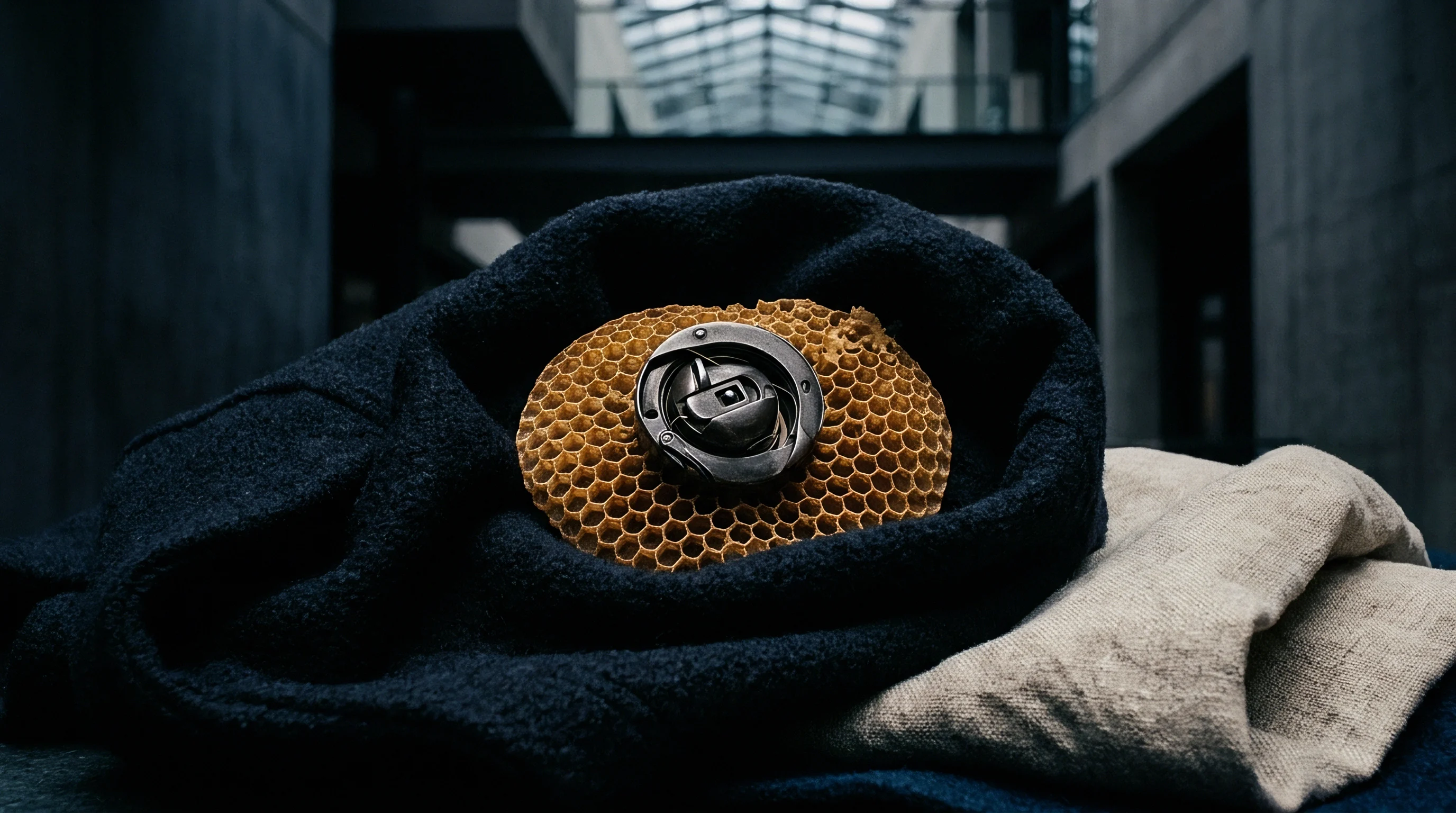
Does Solvent Choice Shift Viscometric Evaluation Results?
Intrinsic viscosity measurements vary based on solvent composition, cellulose concentration, and shear rate inside the capillary tube. Cuprammonium hydroxide and cupriethylenediamine solvents interact differently with dissolved glucan polymers. Cupriethylenediamine provides superior stability against atmospheric oxidation during testing, whereas cuprammonium requires strict nitrogen blanketing to prevent rapid oxidative degradation of dissolved chains during the flow timing.
Calculations convert specific viscosity into intrinsic viscosity via the Martin equation or Huggins-Kraemer expansions. For cupriethylenediamine solutions of cotton cellulose, the empirical relationship links intrinsic viscosity eta to viscometric degree of polymerization DPv:
DPv equals one point three three multiplied by the intrinsic viscosity raised to the power of one point zero零.
Alternative formulations published in industrial standards utilize differing constant parameters, producing discrepancies up to fifteen percent on identical textile samples. Sourcing dossiers must define the exact conversion formula alongside raw efflux data.
ISO 5351 cupriethylenediamine testing requires capillary temperature control within 0.1 degrees Celsius to prevent measurement errors exceeding 80 DPv units.
Sampling location across the finished rope cross section reveals severe intra-bundle variation. Technicians who extract testing specimens exclusively from exterior face yarns fail to detect interior hydrolytic damage. A comprehensive quality audit protocol mandates mechanical separation of individual rope samples into three distinct radial zones prior to chemical dissolution.
Specimen preparation demands complete extraction of sizing agents, residual paraffin waxes, and synthetic lubricants prior to solvent exposure. Insoluble non-cellulosic matter obstructs capillary viscometer apertures, distorting flow times and yielding falsely elevated viscosity readings. Dilute acid washing followed by ethanol Soxhlet extraction removes non-cellulosic contaminants without causing further chain scission.
The industry currently lacks consensus regarding whether low-level carbonyl end-group oxidation during bleaching accelerates solvent-induced alkaline beta-elimination inside cupriethylenediamine solutions.

Settlement
Commercial acceptance and dispute resolution over degraded cotton goods rely on objective contractual boundaries for mechanical and chemical metrics. Fabric specification sheets must link raw material requirements, maximum allowable range speeds, and minimum permissible viscometric degree of polymerization thresholds directly to final performance metrics. Sourcing contracts that specify only grab tensile strength or mass per unit area leave buyers vulnerable to latent hydrolytic damage that manifests downstream during garment laundering.
Purchasing specifications establish strict boundaries for molecular preservation across continuous preparation steps:
- Initial Greige Baseline establishes incoming cellulose quality between 2500 and 2800 viscometric degree of polymerization units prior to chemical processing.
- Scoured Intermediate Target maintains molecular length above 2200 units following caustic extraction and continuous demineralization stages.
- Fully Bleached Standard sets the absolute acceptance threshold at 1900 units on finished, optical-brightener-ready white goods.
- Radial Core Tolerance limits the maximum allowable discrepancy between surface and centerline yarn viscosity to two hundred units.
When laboratory testing identifies viscometric degree of polymerization decay exceeding contract tolerances, commercial liability falls on the processing mill. The cost impact extends beyond the base conversion charge. Severely degraded cotton substrate cannot be salvaged through topical softeners or crosslinking resin treatments, which further depress mechanical tear strength.
The entire production run faces downgrading to non-critical utility classifications or outright commercial disposal.
A standard specification clause enforces accountability by stating that delivery acceptance remains contingent upon whole-bundle core testing meeting ISO 5351 criteria with zero tolerance for hidden radial degradation gradients.