Official Moisture Regain Calculations for Binary Fiber Mixture Customs Declarations
Official moisture regain calculations convert anhydrous dry mass into legal commercial mass to determine chief weight tariff lines for binary fibre imports.

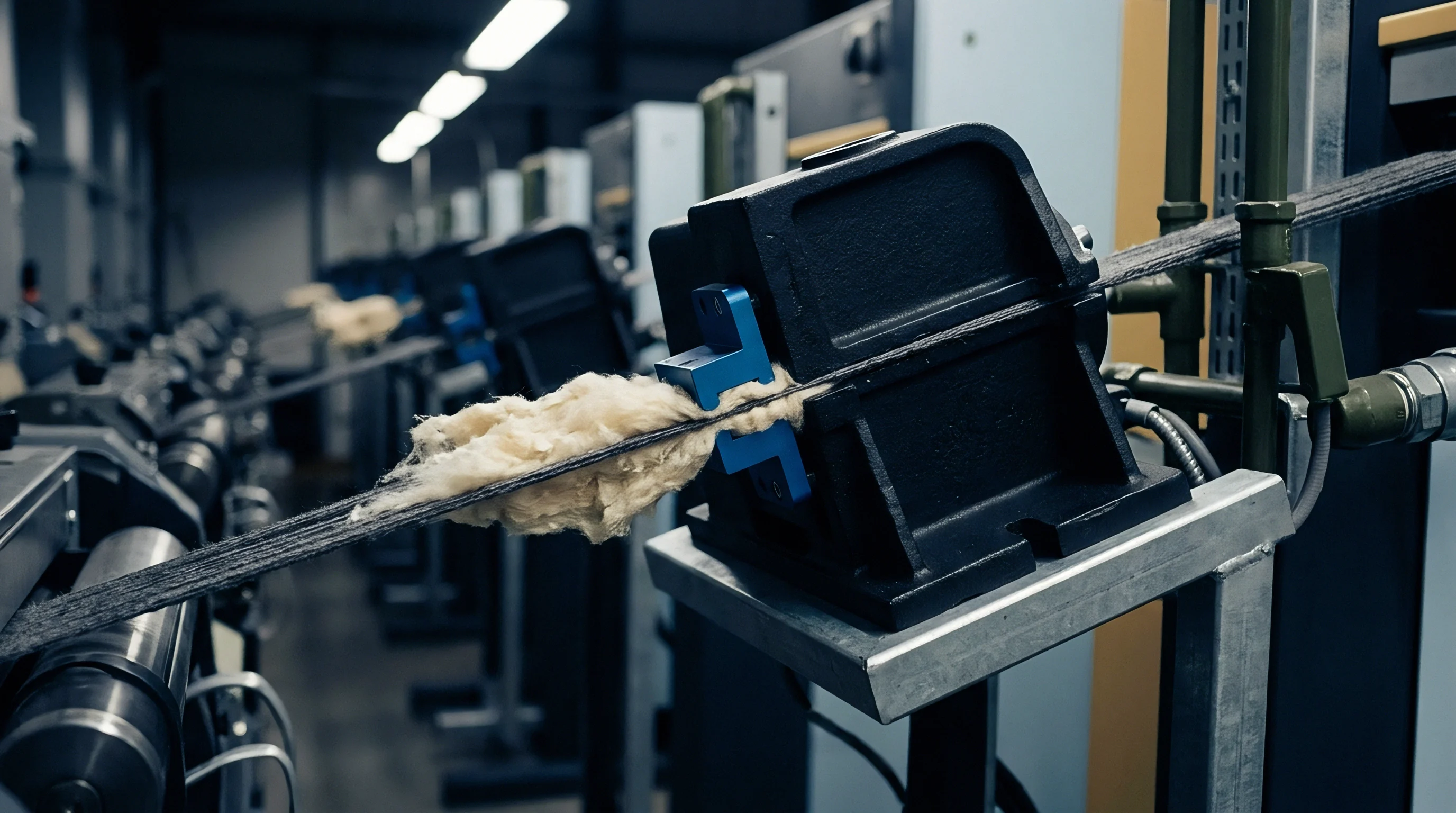
Port
Bales unloading at container terminals carry water absorbed from ocean humidity or storage floors, but customs authorities ignore physical weighbridge figures when assessing textile tariffs and classification lines because absorbed water alters billed mass. Tariff line determination relies on commercial mass ~ a calculated figure combining anhydrous dry fibre weight with legal moisture regain allowances. A binary blend entering clearance with a nominal fifty-fifty ratio on invoice documents can cross critical tariff thresholds once moisture factors are applied to dry components.
Harmonized System chief weight rules grant dominance to whichever fibre carries higher mass after adjustment. Physical weight shifts across ocean voyage legs, but calculated commercial weight remains legally constant.
Customs officers weigh net lots to verify gross declarations, then draw physical samples for quantitative chemical analysis. When actual moisture content inside a shipping container reaches eleven percent, an uncorrected weight declaration overstates entry mass and unnecessarily increases ad valorem duty liabilities. Conversely, understating mass through unadjusted dry weight figures triggers misdeclaration penalties and customs holds.
Importers must align declared commercial mass with governing regulations before lodging bills of lading at border points.
- Dockside Net Mass Verification Inspectors weigh delivered bales at ambient humidity levels to establish gross baseline weights.
- Analytical Sample Extraction Laboratory technicians pull representative cores from sealed packages under ISO 5089 protocols to prevent moisture loss during transit.
- Anhydrous Dry Weight Determination Testing facilities desiccate samples at one hundred five degrees Celsius until consecutive weighings show absolute stability.
- Conventional Regain Application Technicians multiply anhydrous masses by legal regain percentages set out in national tariff schedules to derive declared commercial weight.
Discrepancies between physical dock weight and legal commercial mass complicate entry audits. When a container holds synthetic blends, low moisture absorption in polyester contrasts sharply with high regain in cellulosic components. This weight drift distorts composition percentages unless calculations follow standardized regulatory formulas.
Border compliance hinges on calculating commercial mass before lodgement rather than relying on bill of lading weights.
Bales held at ninety percent relative humidity gain up to three percent total weight without changing internal dry fibre mass.
Failure to apply commercial regain formulas before lodgement leaves importers vulnerable to tariff reclassification, retroactive duty assessments, and administrative fines when customs laboratories perform independent quantitative chemical tests on drawn swatches.

Standard
International regulatory authorities set conventional moisture regain factors to standardise commercial mass across trade transactions, with standards ISO 6741 and EU Regulation 1007/2011 Annex IX governing these fixed percentages. Because fibres absorb atmospheric moisture, hydrophilic structures like wool and viscose retain significant water, whereas hydrophobic synthetics like polyester and polypropylene hold very little. These conventional values are not physical moisture readings from the dock; they are statutory percentages used to calculate commercial weight regardless of ambient conditions.
Customs declarations require applying these specific percentages to the oven-dry mass of each component in a binary blend. Discrepancies arise when market participants mistake standard laboratory conditioning levels for legal commercial regain factors. ISO 139 defines a standard conditioning atmosphere at twenty degrees Celsius and sixty-five percent relative humidity, but commercial regain factors exceed these equilibrium values to account for processing oils, commercial tolerances, and historical trade agreements.
| Fibre Type | ISO 6741 Regain % | EU 1007/2011 Regain % | US CFR 19 Regain % |
|---|---|---|---|
| 8.50 | 8.50 | 8.50 | |
| 18.25 | 18.25 | 13.60 | |
| 13.00 | 13.00 | 11.00 | |
| 1.50 | 1.50 | 1.50 | |
| 5.75 | 5.75 | 4.50 | |
| 2.00 | 2.00 | 1.50 |
Differences between jurisdictions complicate global filings. United States Customs and Border Protection regulations under Title 19 of the Code of Federal Regulations specify commercial regain values that differ from European Union standards for wool and viscose. A binary wool and polyester shipment declared in Rotterdam uses eighteen point two five percent for combed wool, while the same shipment entering US borders uses thirteen point six zero percent.
Importers operating across multiple trade corridors must adapt their calculations to match destination port rules.
- Jurisdictional Factor Mismatch Applying European Union regain factors to United States customs entries alters declared weights beyond permissible customs tolerances.
- Non-Standard Finish Inclusion Failing to deduct non-fibrous extraction materials before applying regain factors inflates commercial mass calculations incorrectly.
- Conditioning Misinterpretation Confusing ambient laboratory moisture equilibrium with statutory commercial regain values distorts quantitative blend declarations.
- Fibre Category Confusion Applying carded wool factors of seventeen percent to combed wool lots requiring eighteen point two five percent invalidates border paperwork.
Contractual sales agreements must specify that invoiced mass follows ISO 6741 commercial mass definitions rather than physical weight recorded at shipping docks.

Formula
Quantitative chemical analysis yields the oven-dry mass of each fibre component in a binary mixture following solvent or acid dissolution under ISO 1833 standards. While dry mass is constant, converting dry mass findings into official customs declarations requires a multi-step calculation, as direct dry weight ratios cannot serve as declared composition figures on customs entries. The commercial regain factor of each component alters the final calculated weight ratio.
Calculation begins by establishing the clean dry mass of fibre A and fibre B after removing non-fibrous matter like lubricants or sizes. Laboratory equipment measures dry mass A and dry mass B in grams. Commercial mass for each component equals dry mass multiplied by one plus the specific commercial regain percentage divided by one hundred.
The sum of commercial mass A and commercial mass B establishes total commercial mass, and declared composition percentages derive from individual commercial mass divided by total commercial mass.
| Component Pair | Oven-Dry Ratio % | Regain Factors % | Commercial Mass % | HS Chapter Shift |
|---|---|---|---|---|
| 50.00 / 50.00 | 8.50 / 1.50 | 51.72 / 48.28 | Shift to Chapter 52 | |
| 49.00 / 51.00 | 13.00 / 1.50 | 51.71 / 48.29 | Shift to Chapter 54/55 | |
| 48.00 / 52.00 | 18.25 / 2.00 | 51.81 / 48.19 | Shift to Chapter 51 | |
| 80.00 / 20.00 | 5.75 / 1.50 | 80.68 / 19.32 | No Chapter Shift |
Consider a fifty-fifty nominal cotton and polyester spun yarn lot. Quantitative dissolution yields exactly fifty grams of oven-dry cotton and fifty grams of oven-dry polyester. Cotton commercial mass equals fifty multiplied by one point zero eight five, yielding fifty-four point two five grams.
For polyester, multiplying fifty by one point zero one five gives fifty point seven five grams (rather than fifty-seven point seven five). Total commercial mass equals one hundred five point zero zero grams. The declared commercial percentage for cotton becomes fifty-four point two five divided by one hundred five, reaching fifty-one point seven two percent, while polyester drops to forty-eight point two eight percent.
This calculation alters tariff classification under Harmonized System rules. Article classification shifts from Chapter 55 for synthetic staple fibres to Chapter 52 for cotton products because cotton accounts for chief weight by commercial mass. Customs officers reviewing entry summary forms recalculate blend composition from raw laboratory dry data.
If an importer submits dry mass percentages instead of commercial regain percentages, border officers issue reclassification notices based on chief weight rules.
Calculated commercial mass derived under ISO 6741 overrides scale weights for duty valuation across all major customs territories.
In commercial blend declarations, moisture regain favors the more hydrophilic fibre component every time.

Chamber
Laboratory testing procedures demand strict environmental control during sample handling and drying stages to drive off uncombined water. Standard ventilated drying ovens operate at one hundred five degrees Celsius plus or minus three degrees, using forced air circulation to clear evaporating moisture continuously. Samples stay in heating chambers until mass loss stops completely.
Sequential weighings performed at fifteen-minute intervals must show less than zero point one percent variation to confirm total dryness.
Desiccator transport prevents dry samples from absorbing atmospheric moisture before analytical balances record weights. Dry natural fibres act as powerful desiccant materials when exposed to ambient room air; cotton swatches exposed to ambient bench humidity gain zero point five percent mass within two minutes. Weighing vessels must remain sealed during transfer from oven chambers to analytical balances, though automated oven systems with integrated weighing platforms eliminate room air exposure altogether.
- Verify Oven Calibration Check temperature distribution across drying shelves monthly to prevent incomplete drying spots.
- Enforce Desiccation Timings Allow sealed weighing bottles twenty minutes inside desiccators to reach balance chamber temperature before recording figures.
- Subtract Extraction Residu Perform Soxhlet extraction with petroleum ether prior to oven drying to eliminate spinning lubricants that alter dry mass.
- Audit Container Seals Inspect glass ground joints on weighing bottles to ensure atmospheric air cannot leak inside during cooling.
Commercial disputes arise when mill laboratories run incomplete drying cycles to save time. Shortening oven residence time leaves residual moisture inside dense yarn packages, which counts artificially as fibre mass and distorts dissolution ratios. When customs central laboratories re-test disputed lots using complete drying cycles, declared weights drop, uncovering revenue shortfalls and inventory deficits.
Systematic weighing errors during laboratory drying stages distort import valuation calculations directly.
Suppliers frequently defend blend variances by arguing that factory conditioning rooms matched international ambient humidity standards during packing operations.


Deduction
Discrepancies between invoiced mass, physical landed mass, and official commercial mass require systematic ledger adjustments when bales retain ocean humidity. Customs authorities allow importers to deduct excess moisture mass from gross valuation when physical landed weight exceeds official calculated commercial weight. Conversely, if physical weight falls below calculated commercial weight due to dry transit conditions, duty remains payable on the higher calculated commercial mass figure, as tariff law assesses duty on legal mass rather than water loss during transit.

Where Does Commercial Mass Diverge from Physical Dock Weight?
Divergence occurs whenever relative humidity during shipment differs from standard regain equilibrium points. A shipment of eighty percent wool and twenty percent polyamide yarn packed in high humidity arrives at destination ports weighing ten thousand two hundred kilograms. Laboratory sampling establishes an anhydrous dry mass of eight thousand five hundred kilograms.
Applying statutory wool regain of eighteen point two five percent and polyamide regain of five point seven five percent yields a commercial mass of nine thousand nine hundred sixty-six kilograms. The importer petitions customs for a valuation deduction on two hundred thirty-four kilograms of water weight.
- Certificate of Quantitative Analysis Independent accredited laboratory reports detailing dry mass ratios and test method references.
- Consignment Weighing Certificate Certified dockside scale tickets recording gross and net physical entry weights.
- Moisture Allowance Computation Sheet Itemized mathematical worksheets converting dry mass to commercial mass using destination country factors.
- Clean Consumption Invoice Original commercial invoices showing dry fibre mass bases and agreed regain contract clauses.
Navigating customs deduction claims requires submitting certified analysis documentation before entry finalization. Customs authorities reject post-clearance deduction requests if physical samples were not drawn under official supervision at port arrival. Retaining port-drawn representative samples preserves rights to dispute administrative duty assessments.
Unresolved questions remain regarding how customs valuation authorities treat non-reversible chemical finishes that permanently lower a fibre’s natural regain capacity. When microencapsulated moisture barriers or fluorocarbon treatments prevent cotton from absorbing its legal eight point five percent regain allowance, border authorities face an analytical conflict. The physical cloth cannot reach statutory moisture levels under standard conditioning, yet commercial rules dictate using theoretical regain values.
Border practices vary between applying fixed statutory formulas or accepting actual physical absorption limits documented by accredited testing houses.

Tariff
Because tariff rates follow weight, duty spreads between Harmonized System chapters make binary mixture regain calculations a central financial risk factor in textile procurement. A blend declared as fifty percent synthetic staple fibre and fifty percent combed cotton carries vastly different duty rates depending on which component holds chief weight. In European tariff schedules, synthetic staple yarns under Chapter 55 carry four percent duty, whereas combed cotton yarns under Chapter 52 carry four point zero or zero duty under specific trade agreements.
Crossing chief weight thresholds reclassifies whole shipments, altering landed costs per finished metre instantly.
Procurement teams drafting purchase specifications must model blend ratios across both dry mass and commercial mass spectrums. Nominal fifty-fifty specifications written by product designers convert to cotton-majority mixtures once standard regain factors apply. A target fifty-fifty cotton and polyester yarn requires spinning an actual dry blend ratio of forty-eight point three percent cotton and fifty-one point seven percent polyester.
Spinning a true fifty-fifty dry mass ratio produces a cotton-dominated commercial mixture on entry forms, triggering unexpected customs line shifts.
| Nominal Specified Blend | Spinning Dry Mass % | Customs Declared % | HS Tariff Line | Landed Cost Shift |
|---|---|---|---|---|
| 50.00 / 50.00 | 51.72 / 48.28 Cotton | Chapter 52 (Cotton) | Preferential Rate Applies | |
| 48.20 / 51.80 | 49.92 / 50.08 Polyester | Chapter 55 (Synthetic) | Base Duty Rate Applies | |
| 50.00 / 50.00 | 52.69 / 47.31 Viscose | Chapter 54 (Artificial) | Specific Origin Rules | |
| 46.50 / 53.50 | 50.12 / 49.88 Wool | Chapter 51 (Wool) | High Ad Valorem Duty |
Contractual agreements with spinning mills must define whether composition tolerances apply to dry fibre mass or commercial declared mass. When contracts omit this distinction, mills deliver nominal blends based on dry hopper weighings. The resulting shipments fail destination customs entry audits due to composition shifts caused by legal regain additions.
Sourcing teams writing RFQ clauses specify that blend tolerances of plus or minus three percent apply directly to calculated commercial mass under destination port rules.
Contract clauses specifying commercial mass blend ratios prevent tariff line jumps caused by natural moisture regain calculation shifts.
A buyer specifying binary fibre mixtures calculates landed margins using destination customs regain factors before placing bulk yarn commitments. Mill production teams adjust spinning hopper weights to deliver desired commercial mass percentages at border clearance. Incorporating these mathematical calculations into purchasing specifications protects landed cost margins against border adjustments.