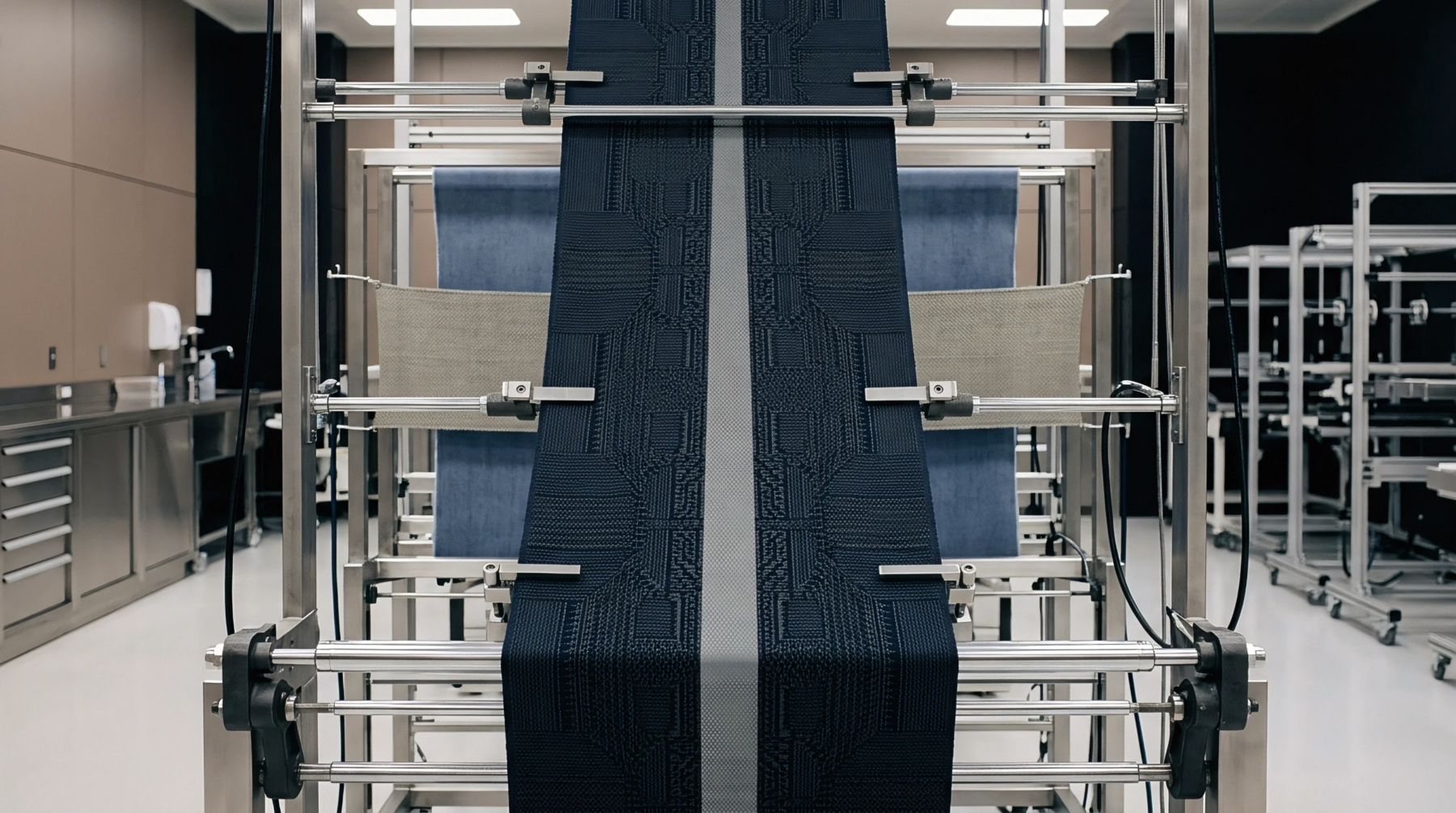
Tension Adjustment
Automatic looms utilize a mechanical or electronic system to maintain uniform warp yarn tension during the shedding process. Modern backrest compensation oscillates the position of the rear rest beam to offset the length changes caused by the movement of harness frames.
Mechanical Feedback
The assembly uses springs or servo motors to respond to the peak loads generated during the beat-up and shedding cycles. In mechanical configurations, the backrest compensation relies on adjustable weights and pivot points to dampen the shock of rapid tension spikes. Electronic versions use load cells to measure real-time forces and adjust the beam position through high-speed actuators.
These systems allow for precise control of the crimp balance between warp and weft yarns. Coordination between the let-off motion and the compensating beam ensures that the yarn path length remains constant regardless of the shed geometry.
Fabric Quality
Uniformity in the woven structure depends on the ability of the loom to manage these fluctuations without inducing yarn breakage or surface irregularities. Effective backrest compensation reduces the incidence of start-up marks and maintains a consistent pick density across the length of the roll.
Production Monitoring
Quality inspectors verify the settings during the loom setup for new articles to confirm the tension profiles match the specification for the specific yarn count and density. Accurate calibration of the backrest compensation prevents variations in fabric width.