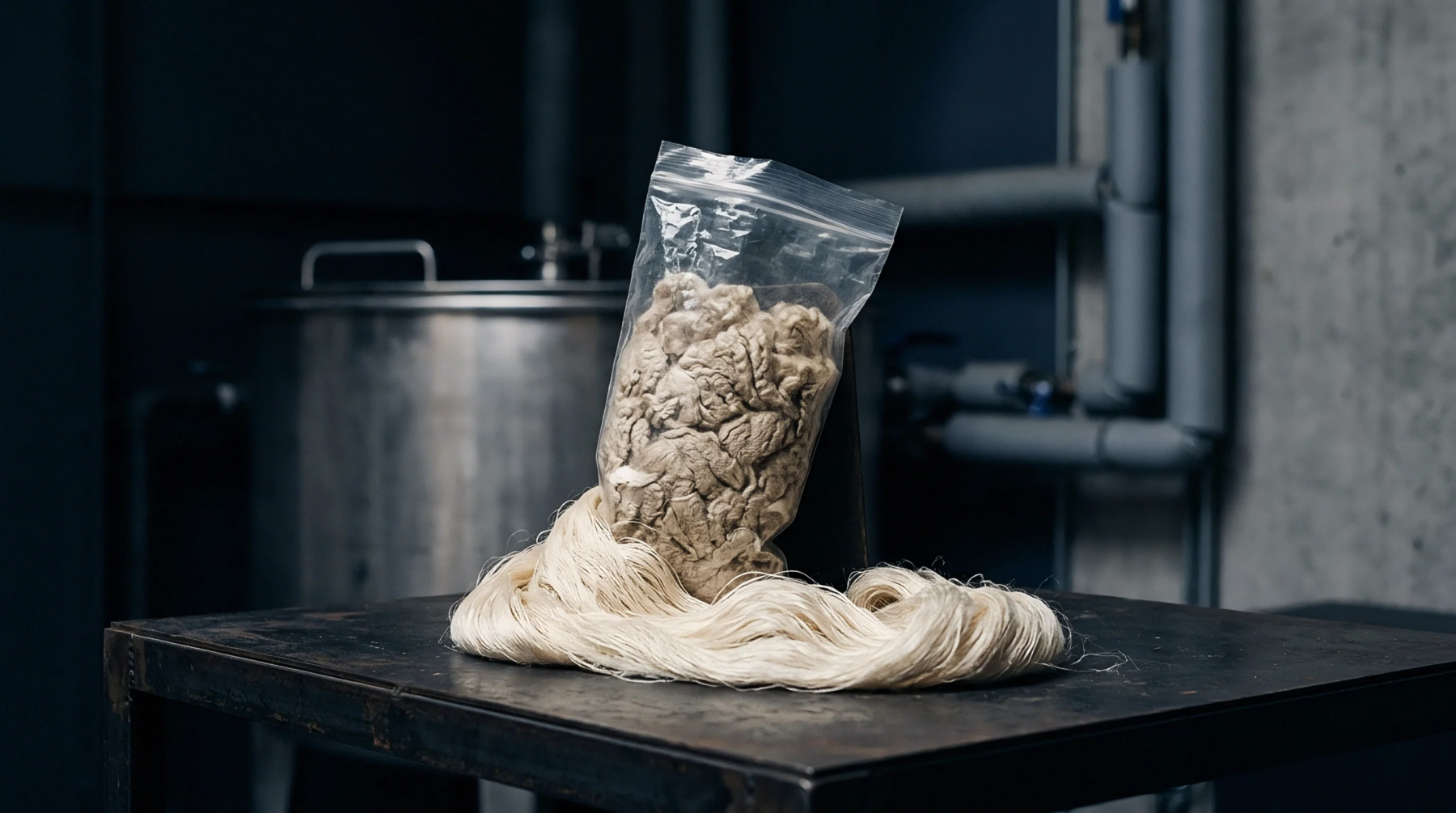
Spun Yarn Morphology
Peripheral components consist of individual filaments or segments that fail to integrate into the central core structure during the twisting process. These wrapper fibers protrude from the surface of the yarn, creating a distinct visual and tactile discrepancy compared to the main body of the yarn. Such protrusions occur when the drafting tension fluctuates during ring or open end spinning, causing certain lengths of material to lose their alignment with the drafted bundle.
Inspection of these anomalies happens during the grading phase where the overall hairiness of the yarn surface defines the final quality rating.
Production Boundary
Processing stage limits define the presence of these segments based on the rotational forces applied at the spindle. Spinning frame settings regulate the friction that secures filaments into the core, and deviations here lead to the appearance of uncontrolled loops. Higher spindle speeds often force these elements outward due to increased centrifugal force acting on the loose ends of the staple material.
Technical Metric
Measured hairiness indices rely on optical sensors that count the number of fibers extending beyond a defined distance from the yarn axis. Analysts report these values in terms of total length per centimeter or as a percentage of the total surface area. Low counts indicate a compact structure, whereas high counts signal excessive protrusion that will likely shed during downstream weaving or knitting operations.
Surface Friction
Excessive protruding segments alter the coefficient of friction against tensioning devices and loom components. These fibers catch on machine guides, causing localized stress that leads to snap points and periodic downtime. Reduced physical contact between the yarn and its surroundings remains the goal of efficient spinning to prevent the accumulation of loose debris.