Quantitative Fiber Analysis Methods for Commercial Customs Declarations
Customs classification relies on oven-dry chemical gravimetry adjusted by statutory moisture regain rates rather than raw commercial invoice declarations.


Tariff
A border inspection notice circling 51.4 percent polyester and 48.6 percent combed wool on a customs gravimetric work sheet triggers immediate reclassification from Chapter 51 into Chapter 55. The tariff split settles everything. Customs administrations evaluate imported textiles through precise chemical mass, discarding the commercial descriptions printed on manufacturer swing tags and mill invoices.
Sourcing teams frequently negotiate supply agreements based on nominal production recipes, forgetting that border authorities enforce statutory revenue schedules through laboratory dissolution rather than spinning floor intentions.
Classification Thresholds under Harmonized System Rules
General Rules for the Interpretation of the Harmonized System place mixed yarns and multi-fiber cloth under the heading corresponding to the material predominating by weight. Section XI Note 2(A) dictates that goods classifiable in two or more chapters qualify under that single heading composed of the textile material exceeding all other individual constituents in absolute mass. A mill spinning an intimate mixture of 52 percent carded cotton and 48 percent polyester staple yarn creates a product governed by Chapter 52.
Should spinning room humidity or lot contamination slip that cotton ratio to 49.8 percent upon arrival, the entire shipment transfers automatically to Chapter 55.
Analytical precision protects border capital. Tariff rate differentials between natural fibers and man-made staples routinely range between six and eighteen percent ad valorem. The customs officer detains the container.
Importers targeting preferential tariff treatments under regional trade agreements encounter catastrophic duty exposure when certified constituent thresholds fail border verification. Bilateral rules of origin frequently require specific processing stages for the predominant fiber, meaning a classification transfer revokes the preferential certificate and re-establishes general duty rates.
Customs authorities classify mixed yarns strictly by the constituent carrying the greatest percentage by clean dry weight.

Chief Weight Preponderance in Mixed Goods
Customs valuation offices examine the commercial split across boundaries where duty rates jump by double digits. In apparel items categorized within Chapter 61 and Chapter 62, the component fabric determining classification is the outer shell material, analyzed without linings, pocketing, or decorative trimmings. When that outer shell incorporates two or more discrete fiber families intimately combined in the yarn stage, quantitative gravimetry establishes the legal heading.
Border clearance collapses immediately. A difference of half a percentage point converts a lower-tariff cotton garment into a heavily taxed synthetic product. Customs regimes reject commercial rounding practices; a test result of 50.05 percent synthetic material creates chief weight status under Chapter 60, Chapter 61, or Chapter 62, eliminating any natural fiber classification benefits.
A five-decimal miscalculation of moisture allowance triggers mandatory customs seizure, compounding unpaid import duties with punitive civil penalties across every entry cleared within the statutory audit window.


Reagent
Selective chemical dissolution isolates individual polymers from a composite sample through targeted solvent reactions in temperature-controlled glass crucibles. Chemical gravimetry remains the legal benchmark. Standard procedures establish specific organic and inorganic solvents capable of destroying one fiber type while leaving companion fibers intact.
The insoluble residue is collected, dried, and weighed to calculate original mass proportions.

Selective Chemical Dissolution under ISO 1833
Standardized gravimetric procedures submerge prepared specimens into concentrated liquid solvents to extract one fiber type while leaving the companion material intact. ISO 1833 establishes eighteen distinct analytical methods, matching solvent chemistries to specific binary and ternary fiber combinations. Specimen preparation dictates accuracy.
Technicians execute non-fibrous matter extraction prior to chemical attack, eliminating sizing agents, processing oils, and synthetic finishes through continuous Soxhlet extraction.
Solvents destroy synthetic constituents sequentially. In polyester and cellulosic mixtures, ISO 1833-11 applies seventy-five percent sulfuric acid to dissolve cotton, modal, or viscose, leaving polyester filaments undamaged. Conversely, polyamide and wool combinations rely on ISO 1833-7, using eighty percent formic acid to dissolve nylon while preserving keratin protein structures.
Formic acid dissolves polyamide completely. Temperature monitoring remains mandatory throughout the digestion cycle, as excessive heat promotes unwanted degradation of the insoluble constituent.
- Petroleum ether Soxhlet extraction eliminates non-fibrous oils, spin finishes, and residual waxes at eighty degrees Celsius over ninety minutes to avoid false insoluble yield.
- Targeted chemical dissolution degrades the soluble constituent in standardized acid or alkaline media under rigorous thermal monitoring inside sintered glass filter crucibles.
- Deionized water vacuum rinsing neutralizes the remaining substrate completely, preventing ongoing polymer degradation prior to final thermal drying.
- Oven desiccation at standard heat brings the insoluble residue to constant dry mass within an airtight weighing container.
Why Do Border Laboratories Reject Commercial Invoices?
Customs testing houses operate on empirical residue weights. They disregard declarations printed on seller certificates of analysis. Mill test reports frequently rely on indirect mechanical calculations derived from roving feed rates and blowroom draft settings.
These mechanical assumptions ignore real-time fiber waste generation during opening, carding, and combing, which preferentially strips weaker, shorter natural staples while retaining continuous synthetic polymers.
Commercial declarations demand empirical mass. Border analysts conduct duplicate determinations on randomly selected specimen plugs drawn from multiple rolls within a shipping container. Discrepancies between invoice declarations and border measurements stem directly from this methodological divergence.
Mill quality control measures production input; customs laboratories measure finished chemical residue after wet processing, tentering, and scouring have altered the original mass balance.
Compliance with ISO 1833 Method 1 requires pre-treatment extraction of non-fibrous matter before chemical gravimetry begins, or the residue calculation yields an invalid customs certificate.
Correction Factors for Insoluble Residue Mass
Solvent attack inevitably extracts a minor portion of the supposedly insoluble fiber component during quantitative separation. Standard test methods incorporate a mathematical correction factor, designated as d, to compensate for this unavoidable chemical loss. The correction factor represents the mass proportion of the insoluble constituent remaining after exposure to the specified reagent.
Acetone strips secondary acetate cleanly. In an acetate and viscose mixture separated via acetone, secondary acetate dissolves fully while viscose registers a d factor of 1.01, indicating that one percent of the regenerated cellulose mass dissolves in the solvent bath. Customs calculations multiply the recovered insoluble dry mass by d before computing final percentages.
Ignoring the d factor inflates the soluble constituent percentage, creating systematic declaration errors that fail customs verification audits.
| Fiber Combination | Soluble Constituent | Chemical Solvent | Exposure Conditions | Correction Factor d |
|---|---|---|---|---|
| Polyester and Cotton | Cotton | 75% Sulfuric Acid (H2SO4) | 50 °C for 60 min | 1.01 |
| Polyamide 6,6 and Wool | Polyamide | 80% Formic Acid (HCOOH) | 20 °C for 15 min | 1.00 |
| Secondary Acetate and Viscose | Secondary Acetate | 100% Acetone (CH3COCH3) | 20 °C for 30 min | 1.01 |
| Acrylic and Wool | Acrylic | Dimethylformamide (DMF) | 90 °C for 10 min | 1.01 |
| Wool and Polyester | Wool | 5% Sodium Hypochlorite (NaOCl) | 20 °C for 20 min | 1.00 |
Standard commercial purchase contracts stipulate that laboratory findings under ISO 1833-1 supersede all prior manufacturer declarations, shifting all liability for tariff reassessment to the supplier whenever insoluble residue yields diverge by more than one percent.


Oven
Thermal gravimetry isolates the anhydrous mass of a textile specimen by desiccating conditioned samples at 105 degrees Celsius until consecutive weighings show absolute stability. Dry mass excludes water entirely. A ventilated drying chamber equipped with analytical balances accurate to 0.1 milligrams eliminates atmospheric humidity, establishing the true baseline for quantitative chemical calculation.
Natural fibers hold substantial water within their amorphous polymer networks, while synthetic fibers resist moisture sorption.

Dry Mass Determination and Regain Allowances
Commercial value and legal customs weights diverge from pure anhydrous residue because textile fibers absorb ambient atmospheric humidity at widely disparate physical rates. An anhydrous sample consisting of wool and polyester displays a radically different weight distribution than that same textile conditioned in standard atmospheric conditions of 65 percent relative humidity and 20 degrees Celsius. Moisture regain shifts every calculation.
International customs schedules mandate the addition of statutory commercial moisture regain allowances to the oven-dry mass of each separated constituent.
Raw fiber lots carry inherent moisture. To establish commercial customs mass, analysts first calculate clean dry residue via solvent dissolution and oven desiccation, then apply statutory moisture percentages fixed by administrative law. Applying the statutory regain factor transforms the dry mass fraction into commercial mass, which serves as the sole determinant for tariff heading assignment and duty rate application.
Neglecting regain adjustments distorts the declared composition toward hydrophobic synthetic constituents.
Applying the statutory European Union commercial moisture regain of thirteen percent to wool elevates its declared percentage over unadjusted laboratory dry mass.
- Combed wool fibers carry a legal regain allowance of 18.25 percent under European customs schedules, transforming raw dry residues into substantial official commercial mass.
- Pure cotton cellulose receives an official regain adjustment of 8.50 percent across international ports of entry, establishing its baseline for tariff weight calculations.
- Viscose rayon filaments incorporate an allowance of 13.00 percent to compensate for strong moisture sorption along the regenerated cellulose backbone.
- Synthetic polyester filaments register a statutory commercial regain factor of 1.50 percent, creating minimal variance between oven dry weight and declared customs mass.

Commercial Mass Arithmetic for Cross Border Entry
Statutory formulas convert anhydrous weight into commercial weight by applying mandated moisture percentages to each separated constituent. The mathematical calculation multiplies each dry component mass by one plus its statutory regain percentage divided by one hundred. The resulting commercial weights are summed to form total corrected commercial mass, from which the final customs percentage is derived.
Customs chemists verify oven dry weight. Consider an intimate mixture of combed wool and polyester returning an oven-dry clean gravimetric residue of 49.0 grams of wool and 51.0 grams of polyester. On an anhydrous basis, polyester predominates by weight.
Under customs law, the wool dry mass is adjusted by its statutory 18.25 percent allowance, yielding 57.94 grams of commercial wool mass. The polyester mass is adjusted by its statutory 1.50 percent allowance, yielding 51.77 grams of commercial polyester mass. Total commercial mass equals 109.71 grams.
The legally declared ratio becomes 52.8 percent wool and 47.2 percent polyester, moving the classification firmly into Chapter 51.
| Fiber Type | US Harmonized Tariff Schedule | EU TARIC Customs Code | China Customs Schedule |
|---|---|---|---|
| Combed Wool | 18.25% | 18.25% | 18.25% |
| Carded Wool | 17.00% | 17.00% | 17.00% |
| Cotton | 8.50% | 8.50% | 8.50% |
| Viscose | 13.00% | 13.00% | 13.00% |
| Modal | 13.00% | 13.00% | 13.00% |
| Polyamide (Nylon 6 / 6,6) | 5.75% | 5.75% | 5.75% |
| Polyester | 1.50% | 1.50% | 1.50% |
| Acrylic | 2.00% | 2.00% | 2.00% |
Whenever hydrophilic natural polymers intermingle with hydrophobic synthetics, moisture regain adjustments dictate the dominant tariff constituent before the inspector completes gravimetric calculations.


Optics
Microscopic enumeration becomes the sole analytical pathway when chemical solvents dissolve both fiber components simultaneously or leave both unaffected. Fiber count governs visual assessment. When confronted with mixtures of chemically identical polymers, gravimetric separation collapses.
Specialized cross-sectional and longitudinal imaging techniques, codified under ISO 137 and AATCC 20, substitute chemical mass measurement with physical diameter and visual count verification.

Longitudinal Microscopic Analysis for Cellulosic Fibers
Cotton and regenerated wood pulps share identical cellulose chemistry, neutralizing standard acid dissolution techniques. Both dissolve completely in seventy-five percent sulfuric acid, and both resist light alkaline exposure. Zinc chloride dissolves cellulosic matter.
When separating intimate mixtures of cotton and modal or lyocell, analysts mount longitudinal specimens in glycerol on glass slides, examining individual fibers under transmitted light microscopy at four hundred times magnification.
Technicians count individual fiber shafts, measuring mean fiber diameters to calculate volume proportions. Multiplying volumetric yield by specific fiber density converts spatial distribution into dry mass equivalents. Cotton displays a ribbon-like convoluted morphology with a central lumen, whereas lyocell presents a smooth, uniform cylindrical profile.
The analyst enumerates a minimum of one thousand individual fiber segments to produce a statistically defensible mass ratio suitable for customs declaration.

Cross Sectional Separation for Animal Fibers
Keratin protein structures in sheep wool and fine specialty hair display identical chemical solubility in alkaline hypochlorite solutions. Differentiating high-value cashmere from superfine merino wool demands high-resolution scanning electron microscopy or computerized optical projection analysis. Specialty hair misdeclarations represent major anti-dumping and customs fraud exposure, compelling border authorities to verify cuticle scale frequency and cross-sectional roundness.
Cuticle scale height on cashmere shafts measures under 0.55 microns, while sheep wool cuticle scales consistently exceed 0.65 microns. Furthermore, cashmere displays a scale frequency below six scales per one hundred microns of fiber length. Computer-assisted image analysis systems trace fiber perimeter contours, calculating cross-sectional area and distribution.
Laboratories combine these optical measurements with matrix-assisted laser desorption ionization time-of-flight mass spectrometry to identify species-specific peptide markers when physical processing damages surface cuticles.
- Morphological surface damage caused by intensive scouring or enzymatic finishing obscures critical cuticle scale patterns, preventing reliable discrimination between cashmere and merino wool.
- Non-circular cross-section variation in specialty synthetic filaments distorts area-based volumetric estimations, skewing the final mass calculation against gravimetric baselines.
- Dense dyestuff concentration within dark dyed yarns prevents transparent light transmission through fiber shafts, forcing chemical stripping steps that risk physical fragmentation.
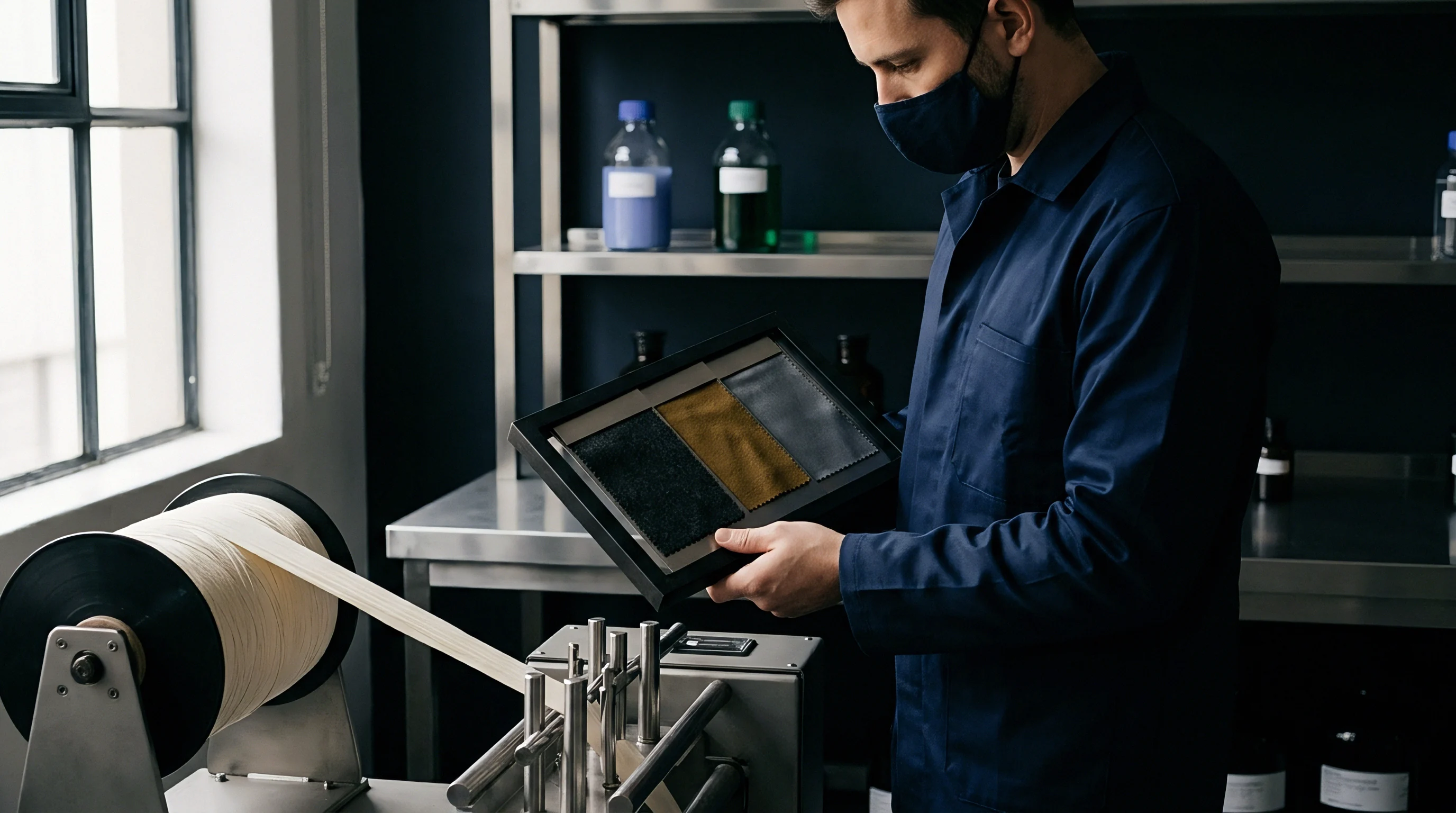
Spinning mills frequently claim that natural flock variation and unpreventable blowroom waste extraction inevitably alter the initial blending recipe during bulk yarn production.
Exposure
Customs authorities enforce strict liability on imported merchandise descriptions, assessing severe penalties regardless of whether composition discrepancies stem from lab variance or commercial deception. The lab report dictates liquidation. The commercial invoice serves as an unverified claim until border authorities test the cargo or accept the entry summary without audit.
Importers bear absolute legal responsibility for the veracity of the tariff classification, the duty rate, and the entered constituent percentages.

Whose Measurement Governs Final Tariff Liquidation?
Statutory trade law grants sovereign customs laboratories absolute legal authority over private mill documentation during official cargo clearance. Commercial certificates from independent commercial laboratories carry persuasive value during administrative protests, but customs chemists retain final authority over testing protocols. If the government laboratory utilizes ISO 1833 chemical separation and confirms a non-conforming constituent ratio, the customs agency initiates formal reclassification proceedings.
The importer pays the tariff differential. Challenging a customs laboratory finding demands proving methodological error, procedural contamination, or equipment miscalibration within the government facility. Importers submit duplicate samples to accredited third-party laboratories, documenting chain of custody from the sealed customs container.
Administrative law judges evaluate conflicting technical reports based on adherence to published standard operating procedures, weighing sample preservation, moisture conditioning, and chemical purity.
Border laboratories treat factory yarn spinning specifications as unverified commercial assertions whenever customs testing reveals constituent variances.

Tolerance Limits between Certification and Entry Audits
Commercial labeling standards like the United States Textile Fiber Products Identification Act permit a three percent manufacturing variance, but customs revenue regimes reject this leniency when calculating duties. Labeling laws prevent consumer fraud by tolerating unavoidable spinning tolerances; customs schedules collect revenue based on exact weight preponderance. Duty rates diverge significantly here.
A cloth containing 51.5 percent man-made fiber qualifies for a man-made textile label under consumer protection rules, but it cannot claim natural fiber tariff rates under Harmonized System classification.
Statutory classification knows no manufacturing tolerances. If a customs laboratory report returns 50.1 percent of an unfavored constituent, the shipment incurs the corresponding duty rate unconditionally. Importers structuring production contracts must establish internal spinning tolerances tighter than border thresholds, ensuring that bulk output variations never drift across critical chapter boundaries.

Landed Cost Sensitivity in Mixed Fiber Shipments
Financial exposure escalates rapidly when a slight composition shift crosses a chapter boundary or an anti-dumping tariff line. Consider a constructed import scenario with stated assumptions: take a 20,000-kilogram consignment of woven apparel cloth declared as 52 percent polyester and 48 percent cotton, carrying an invoice price of 12.00 dollars per kilogram and entered under Chapter 55 at an ad valorem tariff rate of 12.0 percent. Assume customs border testing extracts three random rolls, runs ISO 1833 Method 1 sulfuric acid dissolution, and returns an anhydrous oven-dry split of 49.2 percent polyester and 50.8 percent cotton.
When statutory moisture regain adjustments of 1.5 percent for polyester and 8.5 percent for cotton are applied, the commercial mass recalculates to 47.4 percent polyester and 52.6 percent cotton.
This recalculation shifts the material from Chapter 55 into Chapter 52, where the applicable tariff rate jumps to 19.7 percent. On an entered commercial value of 240,000 dollars, base duty rises from 28,800 dollars to 47,280 dollars. The importer faces an immediate duty differential of 18,480 dollars, alongside customs civil penalties assessing up to twice the unpaid duty, elevating total unexpected cash exposure beyond 55,000 dollars.
| Declaration Parameter | Initial Declaration (Chapter 55) | Customs Test Finding (Chapter 52) | Financial Variance |
|---|---|---|---|
| Declared Fiber Ratio | 52% Polyester / 48% Cotton | 47.4% Polyester / 52.6% Cotton | Chief Weight Reversal |
| Tariff Heading | 5515.11 (Polyester Dominant) | 5210.31 (Cotton Dominant) | Reclassification |
| Ad Valorem Duty Rate | 12.0% | 19.7% | +7.7% Net Rate |
| Base Duty Assessment | $28,800 | $47,280 | +$18,480 Differential |
| Laboratory Retest Fee | $0 | $1,250 | +$1,250 Processing |
| Potential Civil Penalty | $0 | $36,960 | +$36,960 Legal Exposure |
| Total Landed Cost Impact | $268,800 | $325,490 | +$56,690 Cash Outflow |
Whether customs administrations will eventually adopt unified spectroscopic scanning to arbitrate border disputes before chemical dissolution destroys the physical sample remains an ongoing subject of international trade debate.