Determining Cyclic Siloxane Contamination Limits in Closed Loop Recycled Industrial Laundry Systems
Determining cyclic siloxane limits in recycled laundry water requires balancing purge rates and GC MS testing to prevent fabric barrier failure under REACH rules.

Partition
Cyclic methyl siloxanes distribute across wash water, surfactants, and synthetic textiles according to their molecular solubility parameters. With octanol-water partition coefficients between 5.6 and 9.1, hexamethylcyclotrisiloxane (D3), octamethylcyclotetrasiloxane (D4), decamethylcyclopentasiloxane (D5), and dodecamethylcyclohexasiloxane (D6) are strongly lipophilic. Dissolved cyclics readily exit the aqueous liquor, partitioning into surfactant micelles or adsorbing directly onto hydrophobic synthetic fibers.
In closed-loop recovery circuits, clarification and mechanical filtration strip out suspended solids but leave these emulsified siloxanes in the recycled wash stream.
Equilibrium Coefficients across Surfactant Matrixes
The distribution ratio of cyclic siloxanes between liquor and fabric depends on bath temperature, surfactant concentration, and polymer structure. Non-ionic alcohol ethoxylates and anionic linear alkylbenzene sulfonates capture cyclics within micellar cores during standard wash cycles between forty and sixty degrees Celsius. When rinse temperatures drop, those micelles destabilize, and the released siloxanes transfer onto polyester and polyamide fibers to form a persistent organic layer that resists aqueous removal.
A wash bath containing non-ionic alcohol ethoxylates holds ninety-four percent of dissolved decamethylcyclopentasiloxane within surfactant micelles at sixty degrees Celsius.
Micellar Solubilization in Recycled Wash Liquors
Continuous water recycling without phase-separation units steadily concentrates organosilicon species in the circuit. Feeding this water back into the main wash wheel re-exposes incoming loads to accumulated siloxanes. Hydrophobic interactions draw the compounds onto technical textiles, workwear, and barrier fabrics, shifting mass from liquor to fiber until the textile reaches equilibrium with the elevated siloxane levels in the bath.
Low concentrations of organosilicon antifoams are routinely assumed to degrade spontaneously during wash cycles, yet stable cyclic siloxanes persist and accumulate across closed laundering loops.
Steam
Drying stages drive phase transitions among the volatile siloxane rings remaining on damp fabric. Octamethylcyclotetrasiloxane boils at 175 degrees Celsius with a room-temperature vapor pressure of 175 Pascals, whereas dodecamethylcyclohexasiloxane boils at 245 degrees Celsius at 4 Pascals. In continuous tunnel finishers and batch tumblers, lower molecular weight cyclics volatilize into the exhaust stream, while heavier homologues remain fixed to the textile matrix unless temperatures pass two hundred degrees Celsius.

Volatilization Thermodynamics in Tunnel Finishers
Vapor-phase mass transfer depends on drying airflow, fabric residence time, and internal temperature profiles. In tunnel finishers running recirculated air to conserve energy, volatile organosilicon compounds concentrate inside the air plenum. As that hot air meets cooler damp garments entering the tunnel, vaporized siloxanes condense directly back onto the fabric surface.
The resulting cycle turns exhaust emissions into recontamination, undoing any removal achieved in the wash wheel.
Thermal Stripping Mass Balances
Calculating siloxane stripping during industrial drying requires accounting for the individual Henry’s Law constants of each cyclic species. D4 vaporizes quickly in early steam-heating stages, whereas D6 demands prolonged dwell times at peak heat to achieve measurable mass loss. Downstream, cyclics carried into the exhaust duct condense against cooler heat-exchanger surfaces, creating viscous films that trap lint and degrade thermal efficiency.
| Chemical Compound | CAS Number | Boiling Point (°C) | Vapor Pressure at 25°C (Pa) | Log Kow | Volatilization Yield at 120°C (%) |
|---|---|---|---|---|---|
| Hexamethylcyclotrisiloxane (D3) | 541-05-9 | 134.0 | 1200.00 | 5.60 | 98.5 |
| Octamethylcyclotetrasiloxane (D4) | 556-67-2 | 175.0 | 175.00 | 6.49 | 84.2 |
| Decamethylcyclopentasiloxane (D5) | 541-02-6 | 211.0 | 33.20 | 8.07 | 52.1 |
| Dodecamethylcyclohexasiloxane (D6) | 540-97-6 | 245.0 | 4.20 | 9.06 | 18.7 |
Higher drying temperatures vent lower molecular weight cyclics through the air handling ductwork while concentrating heavier homologues directly on the textile substrate.
Instrument
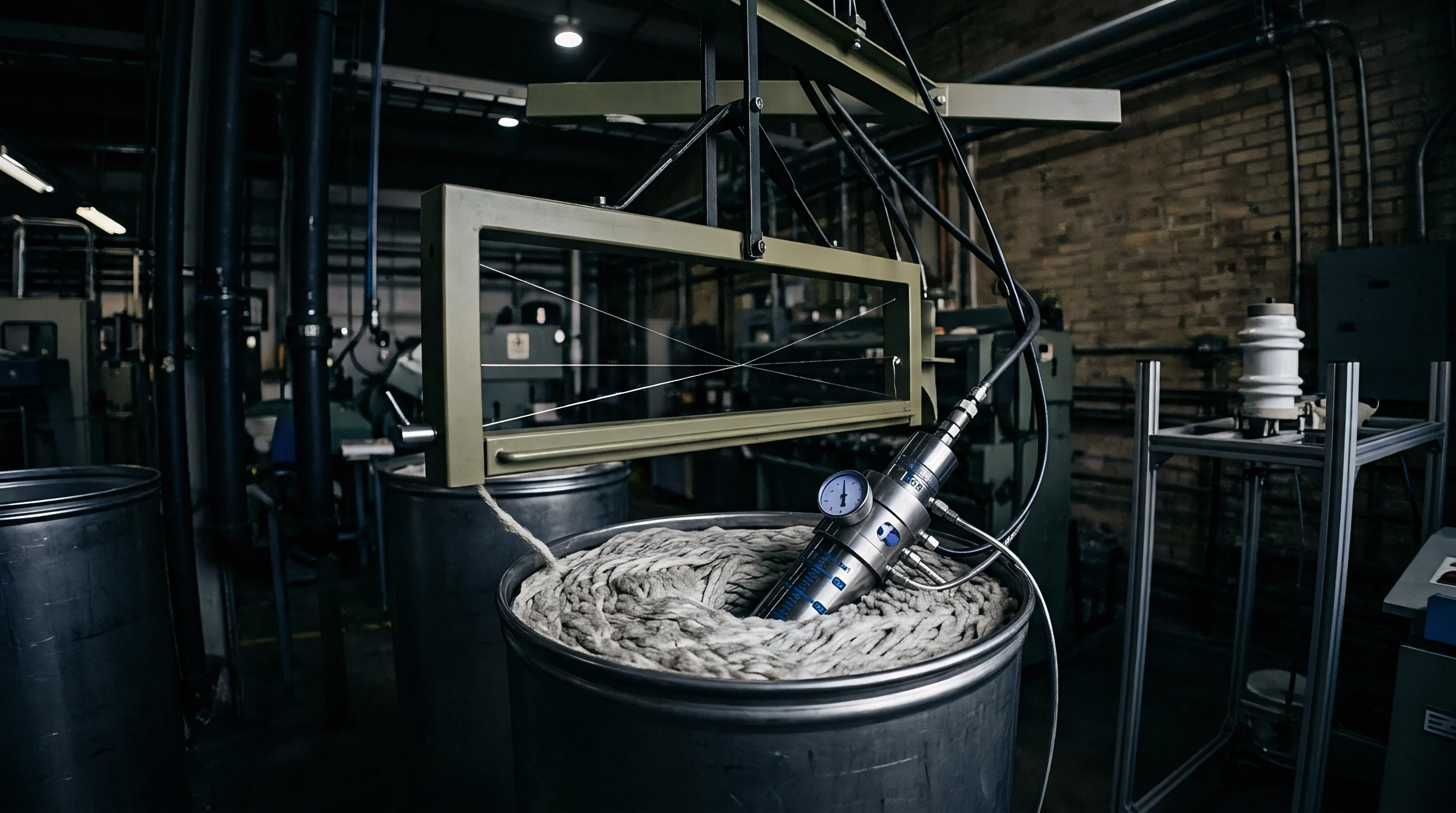
Coupled gas chromatography-mass spectrometry isolates organosilicon monomers from complex laundry extracts. Because textile softeners contain high molecular weight polydimethylsiloxane polymers, quantification requires separating volatile cyclics from the linear polymer backbone. Conventional extraction with n-hexane or ethyl acetate pulls down both fractions.
Direct injection into high-temperature GC inlets causes thermal depolymerization of the linear silicones, creating artifact D3, D4, and D5 peaks that skew analytical results.

How Does Matrix Interference Affect GC MS Accuracy?
Splitless GC injectors run hot enough to crack linear polydimethylsiloxanes into cyclic fragments, inflating measured siloxane concentrations well above true bath levels. Preventing this breakdown requires cold on-column injection or holding inlet temperatures below two hundred twenty degrees Celsius. Using matrix-matched internal standards ~ such as tetrakis(trimethylsilyloxy)silane or deuterated siloxane analogs ~ corrects for background shifts across varying detergent and surfactant loads.
Solvent Selectivity and Degradation Prevention
Solvent selection determines both extraction yield and the degree of matrix co-extraction. Non-polar aliphatic hydrocarbons produce clean extracts with little surfactant carryover, protecting column stationary phases from premature breakdown. During solvent exchange, drying down extracts under heated nitrogen streams strips volatile D3 and D4 alongside the solvent, introducing substantial low-bias errors.
- Collect a representative two-liter sample of recycled wash water from the main header pipe in a fluoropolymer-lined container.
- Add five milliliters of analytical grade n-hexane directly to a fifty milliliter liquid aliquot to execute liquid-liquid solvent extraction.
- Agitate the mixture for twenty minutes using a mechanical wrist-action shaker to partition cyclic compounds into the organic phase.
- Separate the organic phase and inject one microliter into a gas chromatograph utilizing a cold on-column inlet system.
- Quantify D4, D5, and D6 species against calibrated matrix-matched internal standards using mass selective detection in selected ion monitoring mode.
Failure to enforce cold on-column injection under DIN EN ISO 17025 testing protocols produces thermal breakdown of silicone softeners that inflates measured cyclic siloxane values by three hundred percent.
The exact mechanism by which non-silicone matrix co-extractives alter electron ionization response factors during trace siloxane analysis remains unresolved across contract testing facilities.
Residue
Successive wash cycles deposit silicone oil layers that alter the surface characteristics of technical textiles. Cleanroom garments, surgical drapes, and flame-resistant workwear are particularly vulnerable: even thin siloxane films depress fiber surface energy, compromising fluorocarbon finishes and lowering hydrostatic head performance.
Functional Property Loss on Technical Textiles
On flame-resistant meta-aramids and treated cottons, continuous siloxane deposition compromises thermal performance under intense heat. When exposed to flame, organosilicon compounds break down into flammable hydrocarbon gases and silicon dioxide ash; the resulting residue feeds combustion, lengthening vertical char during ASTM D6413 testing. In semiconductor fabrication, cleanroom garments tainted with siloxanes outgas volatile organics directly into cleanroom ambient air, fouling silicon wafer surfaces during production.

Membrane Surface Degradation in Recycled Water Circuits
In recycling plants operating ultrafiltration and reverse osmosis stages, dissolved cyclic siloxanes adsorb directly onto polyamide membrane active layers. The resulting hydrophobic patches accelerate secondary organic fouling, elevate differential pressure across modules, and choke permeate flux. Because conventional clean-in-place regimes with sodium hydroxide or citric acid cannot strip siloxane foulants, plants face aggressive solvent cleaning or premature element replacement.
- Hydrostatic Barrier Collapse occurs when hydrophobic cyclic deposition disrupts the uniform surface tension of fluorocarbon repellents on surgical barrier fabrics.
- Cleanroom Particulate Outgassing develops when volatile organosilicons release from laundered garments onto sensitive semiconductor wafers during assembly processes.
- Flame Resistance Alteration manifests when organosilicon accumulation forms combustible thermal degradation products on Nomex protective wear during arc flash exposure.
- Membrane Permeate Flux Decline results from hydrophobic siloxane oil film formation across reverse osmosis membrane active layers within the water recycling loop.
| Textile Application Class | Primary Fiber Type | Max Allowable Siloxane Limit (mg/kg) | Governing Standard / Method | Dominant Failure Mode |
|---|---|---|---|---|
| Class I Infant Wear | 100% Combed Cotton | 50.0 | OEKO-TEX Standard 100 Class I | Dermal sensitization and chemical transfer |
| Cleanroom ISO Class 3 | Continuous Filament Polyester | 10.0 | IEST-RP-CC003.4 GC-MS Outgassing | Volatile organic wafer contamination |
| Flame Resistant Workwear | Meta/Para-Aramid Blend | 100.0 | ASTM D6413 Vertical Flammability | Increased char length and melt drip formation |
| Surgical Barrier Fabrics | Microfiber Polyester / Membrane | 25.0 | AATCC 127 Hydrostatic Head | Loss of liquid penetration resistance |
Hydrophobic organosilicon films on barrier textiles destroy liquid repellency long before visible discoloration appears on the fabric surface.
Allowing cyclic siloxanes to accumulate unchecked in closed wash loops leads to lot rejections for reconditioned cleanroom apparel and forces complete replacement of fouled reverse osmosis membranes.
Threshold
European regulations cap both individual and combined cyclic siloxane concentrations in laundering chemistries and finished goods. Under Entry 70 of REACH Annex XVII, octamethylcyclotetrasiloxane, decamethylcyclopentasiloxane, and dodecamethylcyclohexasiloxane may not exceed 0.1 percent by weight in wash preparations or wash waters. The European Chemicals Agency places D4, D5, and D6 on the Substances of Very High Concern candidate list because of their persistent, bioaccumulative, and toxic profiles.
Regulatory Concentration Limits under REACH Annex XVII
Eco-certification schemes impose additional limits on organosilicons across all product tiers. OEKO-TEX Standard 100 enforces a combined threshold of 1000 milligrams per kilogram for D4, D5, and D6 across textile classes I through IV. Keeping finished textiles within that ceiling requires active mass-balance management across closed-loop laundering circuits.
Recycled Bath Equilibrium Calculations
Determining the steady-state concentration Css of cyclic siloxane in a closed loop processing 1000 kilograms of textile per hour requires balancing incoming mass against freshwater purge rates:
At an 80 percent recycle rate, 800 liters of recycled water blend with 200 liters of fresh makeup water per ton of linen. Incoming soiled garments shed roughly 12 grams of D5 per ton into the bath, giving a mass addition rate Min of 12,000 milligrams per cycle. Steady-state concentration depends on the fresh makeup volume Vfresh and the unit’s removal efficiency Rremoval:
Css = fracMinVfresh + (Rremoval · Vrecycled)
When mechanical filtration achieves zero siloxane removal (Rremoval = 0), the formula simplifies:
Css = frac12,000 mg200 L = 60 mg/L
Because testing costs accumulate per batch, operators must control steady-state concentrations through purge rates alone: at 60 milligrams per liter in the bath, fabric with a 4:1 liquor ratio retains 240 milligrams of liquor per kilogram of fiber. With a fabric-water partition coefficient K = 4.5, siloxanes deposit on the textile at 270 milligrams per kilogram each cycle, breaching OEKO-TEX Standard 100 thresholds after four washes.
- Chemical Input Audit verifies that all incoming detergents, softeners, and defoamers carry certified siloxane concentrations below one hundred parts per million.
- Permeate Purge Ratio Check balances freshwater injection volumes to maintain dissolved cyclic siloxanes below regulatory cutoff values.
- Subcontractor Compliance Verification forces third-party reconditioning laundries to submit quarterly GC-MS wash bath analytical testing reports.
- Certificate Scope Validation ensures that OEKO-TEX Standard 100 testing includes matrix-specific extraction for D4, D5, and D6 species.
Reaching steady state siloxane concentrations in closed wash loops requires balancing freshwater makeup rates against volatile evaporation losses during hot drying phases.
Enforcing REACH Annex XVII Entry 70 limits inside laundry water specifications requires continuous volatile organic blowdowns to safeguard eco-label certifications.

Contract
Allocating liability for chemical contamination in closed recycling loops requires clear water quality thresholds within commercial contracts. Rental operators, industrial laundries, and chemical suppliers establish concrete caps for organosilicon species in incoming wash water and recycled liquor. Laundries that handle cleanroom or technical workwear define these water-quality baselines directly in their customer service agreements.
Liability Mapping for Water Loop Contamination
Commercial agreements define indemnification terms whenever contaminated water damages client stock. If analytical tests confirm cyclic siloxane concentrations above 0.1 percent by weight on finished goods, liability shifts to the laundry for inventory replacement, re-testing expenses, and downstream cleanroom downtime. Contracts typically counter this exposure by requiring chemical suppliers to provide batch-level certificates showing less than 100 ppm total cyclic siloxanes in defoamers, wetting agents, and liquid detergents.

Substantiating Compliance in Asset Service Agreements
Transaction documents mandate quarterly testing of recycled wash water by an accredited independent laboratory using cold on-column GC-MS. If testing detects non-compliant siloxane spikes, default clauses give asset owners the right to halt processing, mandate once-through freshwater washing, and bill the facility operator for system flushing and membrane replacement.