Short Fiber Content Thresholds in Combed Cotton Rotor Spinning
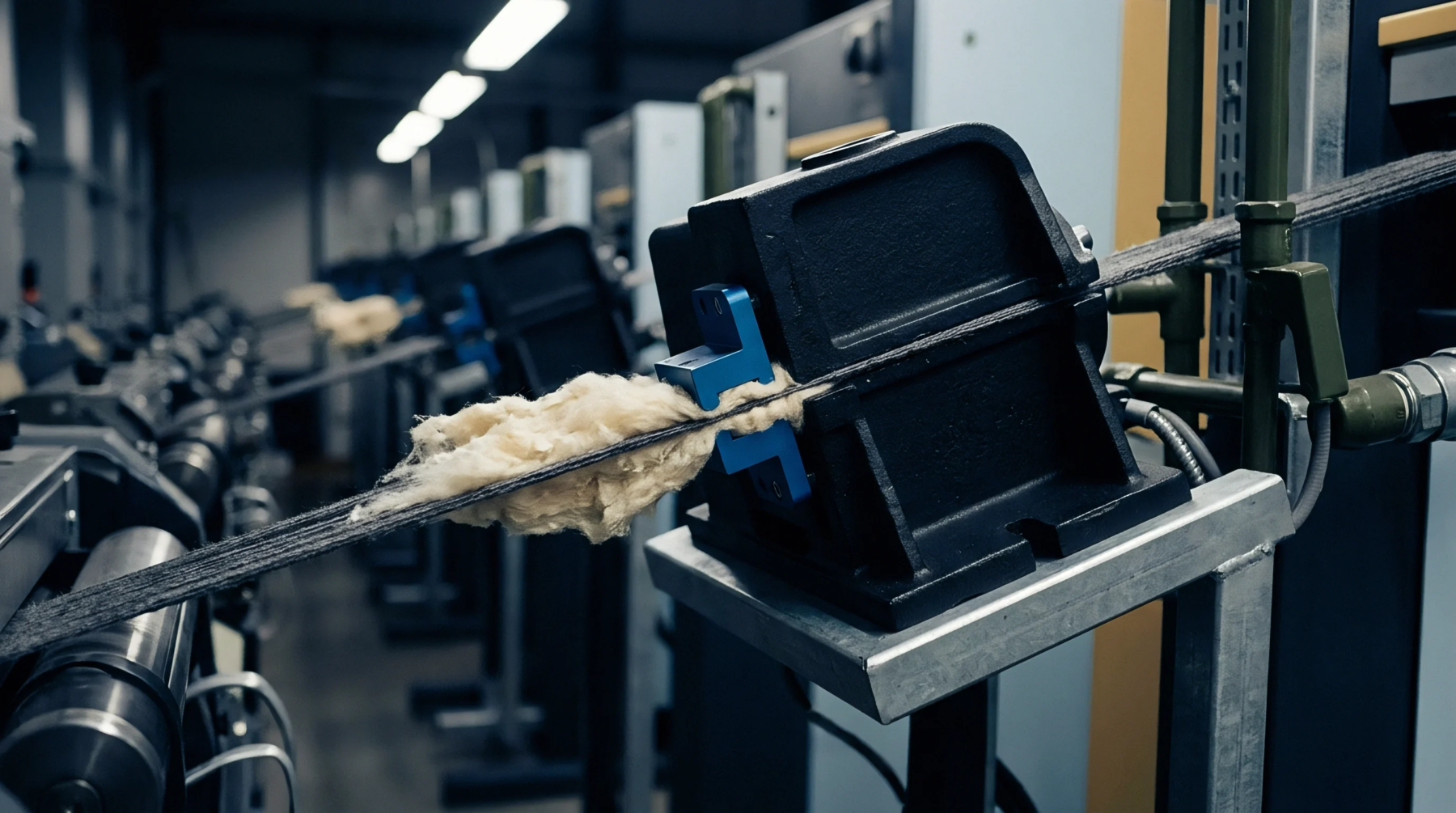
Exceeding twelve percent short fiber content by number in combed cotton sliver accelerates rotor accumulation, increases wrapper fibers, and drops yarn tenacity.
Exceeding twelve percent short fiber content by number in combed cotton sliver accelerates rotor accumulation, increases wrapper fibers, and drops yarn tenacity.

Single fiber length skewness dictates carded ring spun tenacity by governing floating fiber drafting waves and ineffective stress transfer lengths.

Tight card cylinder gauges and high licker-in speeds increase fiber breakage, elevating short fiber content by up to four percent and reducing yarn tenacity.

HVI span metrics quantify cotton length through optical beard scanning, where 2.5 percent span length dictates drafting gauges and uniformity governs noil extraction.

Non-enzymatic deamidation during digestion distorts peptide ratios in historic animal fiber analysis, requiring kinetic rate corrections for species accuracy.

Correcting isobaric peptide mass shifts in proteomic fibre testing prevents false wool detections and protects cashmere customs declarations from penalties.

Standardized trypsin digestion at pH 8.2 and thirty-seven degrees for sixteen hours yields diagnostic peptides separating cashmere from wool by liquid chromatography.

Hydrothermal recycling breaks cashmere keratin disulfide bonds, raising cysteic acid and lanthionine levels, lowering yarn tenacity and spinning yield.

Selected reaction monitoring mass spectrometry quantifies cashmere wool blends down to one percent using species-specific tryptic keratin peptides.

Proteomic LC-MS/MS quantifies animal hair blend percentages by measuring species-specific keratin peptide markers against isotope-labeled internal standards.

LC-MS/MS proteomic quantification isolates species-specific tryptic peptides to measure cashmere content in processed yarns within two percent accuracy.

Proteomic mass spectrometry isolates species-specific keratin peptides to quantify animal fiber blend ratios precisely despite chemical or physical scale damage.

Eliminate border gravimetric variance by specifying ISO 1833-11 dissolution and contractually binding buyers and mills to ASTM D1909 commercial regains.

Standard chemical separation of cotton polyester yarns uses 75% sulfuric acid dissolution with gravimetric recovery corrected for commercial moisture regain.

Dense cotton tufts block near infrared light past three millimeters, hiding synthetic contaminants beneath opaque cellulose surface layers during optical sorting.

Optimizing blowroom tuft speed between 12 and 16 m/s balances camera scan resolution, pneumatic ejection accuracy, and low spinnable fibre waste.

Raw cotton optical sorting relies on multi-spectral cameras to identify botanical and synthetic foreign matter for precise pneumatic rejection.

High heater temperatures mobilize PET cyclic trimers, driving surface crystallization that glazes texturing discs and requires strict HPLC wash thresholds.

High performance liquid chromatography quantifies polyamide cyclic monomer densities down to five parts per million following cryogenic milling and methanol reflux.

Hot Soxhlet extraction thermally volatilises low-MW alkoxylated polyethers, skewing gravimetric finish content and corrupting clean fiber blend declarations.

Chlorinated solvent reflux extracts structural polymer oligomers alongside spin finishes, distorting quantitative gravimetric composition analysis unless corrected.

Quantitative spin finish removal demands targeted binary solvent extraction to prevent gravimetric error in customs fibre composition analysis.

Quantify commercial blend mass through oven desiccation and statutory regain allowances to eliminate hysteresis and condensation errors in customs audits.

Marine container moisture gain alters physical weight on arrival; commercial settlement under ISO 6741 requires adjusting clean oven-dry mass to standard regain.
Commercial moisture regain corrections adjust oven-dry cellulosic fibre mass using statutory allowances to prevent buyers paying pure water rates on dry matter.

Accurate cellulosic blend analysis requires pairing strict solvent reflux kinetics and d-factor scission corrections with standard commercial regain adjustments.

Calibrating empirical acid extraction factors for mercerized fiber prevents under-reporting cotton content and avoids costly customs reclassification disputes.

Commercial weight recalculation adjusts raw fiber invoice mass by adding official contractual moisture regain allowances to laboratory verified oven-dry fiber mass.

Determine commercial moisture regain standards through representative bale core sampling and forced-draft oven drying to convert net shipping mass into billable commercial weight.

Calibrating short-wave infrared sensors using dynamic dual-band ratioing isolates white polypropylene from cotton lint while preventing false ejection cycles.
Expertise is a utility, not a secret. sentiention™ publishes its working knowledge as open reference: intelligence layer covering the materials it sources, the markets it enters, and the reference that serves both.