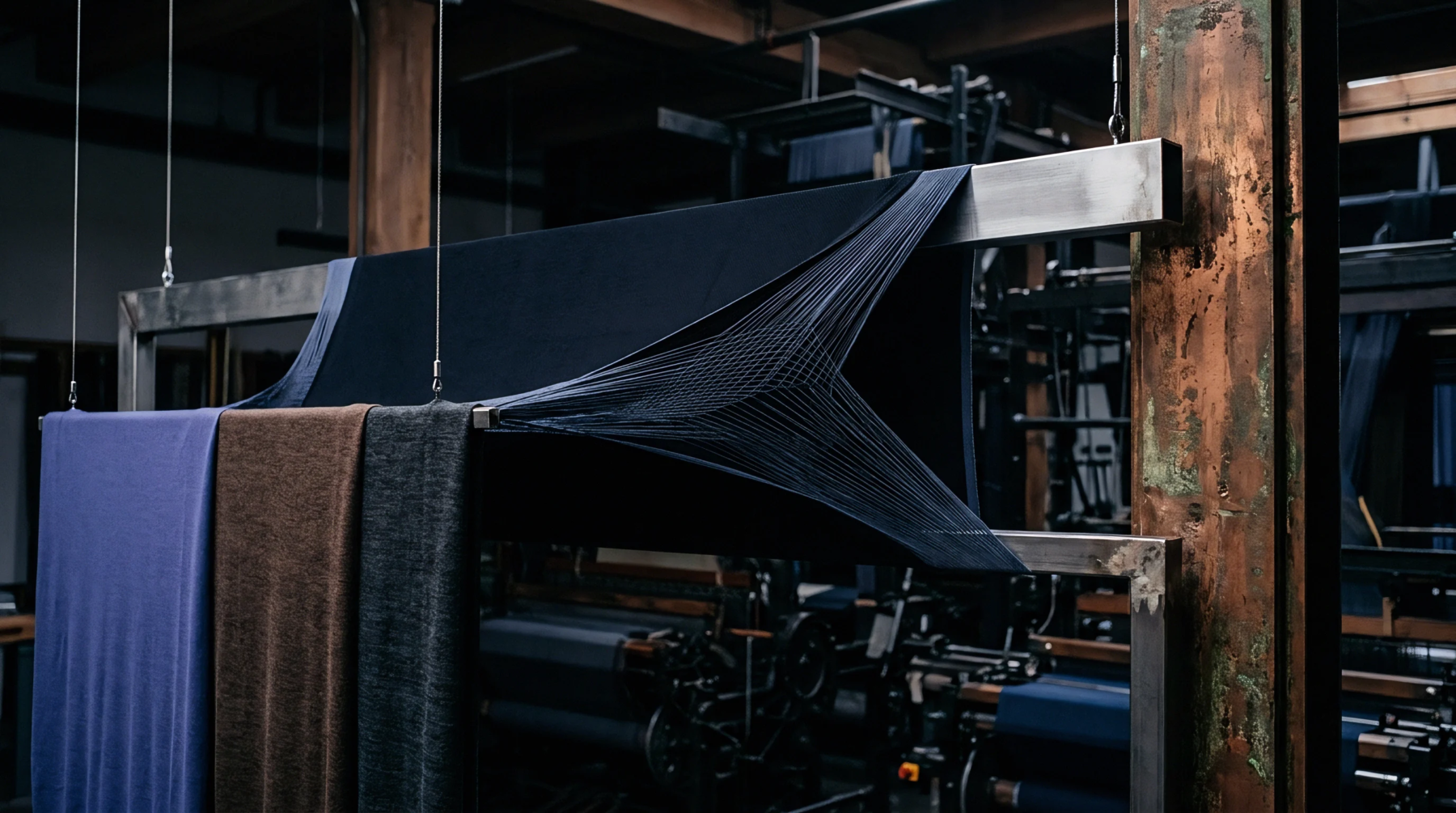
Fabric tensioning
Mechanical systems adjust the speed of entry and exit points to control the degree of relaxation or stretch within a web of material. Stenter pin chain overfeed components regulate this relationship by feeding fabric onto the entry pins at a rate faster than the chain moves through the heating zone. This specific differential in velocity allows the material to shrink or recover during the drying and heat setting cycle.
Control over this speed adjustment prevents the excessive tension that often results in distorted grain or unintended dimensional loss.
Dimensional stability
Production managers utilize the variance in chain velocity to manage the final width and lengthwise shrinkage profile of woven or knitted goods. High settings of the mechanism permit a greater amount of fabric to be deposited onto the pins, which promotes a fuller hand and improved aesthetic character. Excessive speeds often produce an uneven surface or a wavy selvedge due to the accumulation of surplus material.
Consistent monitoring of these input parameters ensures the processed goods meet the required specification for final length and density.
Mechanical linkage
Synchronized drive motors govern the interaction between the conveyor chain and the feeding rollers to maintain a precise ratio during high speed operations. Gears and electronic sensors detect fluctuations in the incoming tension to adjust the feed rate automatically. This system permits the application of chemical finishes by ensuring that the fabric remains slack enough for the absorption of liquids.
Proper operation requires a flat entry path to prevent the fabric from disengaging from the pins during the rapid transition from the feeding unit to the clip or pin track.
Operator influence
Quality assurance protocols focus on the calibration of the feed ratio to prevent localized strain during the fixation of synthetic fibres. Minor variations in the synchronization of these mechanical parts result in uneven heat distribution across the width of the piece. Reliable results require that the input speed matches the shrinkage potential of the fibre type to minimize residual stress.
A stable overfeed ratio determines the success of the finishing process by fixing the fabric at a controlled state of relaxation.